Vue’s event system is deceptively simple yet incredibly powerful. Custom event emission allows child components to communicate upward to their parents without tightly coupling the components. This pattern aligns with Vue’s unidirectional data flow principle, where props flow down and events bubble up.
At its core, emitting a custom event in Vue involves using the $emit method inside a child component. This method takes at least one argument: the event name, typically a string. Optionally, you can pass additional arguments which serve as payloads, carrying data back to the parent.
Here’s a simpler example inside a child component:
export default {
  methods: {
    notifyParent() {
      this.$emit('custom-event', { message: 'Hello from child!' });
    }
  }
}
When notifyParent is invoked, it triggers the custom-event to be dispatched. The parent component, if listening for this event, can then react accordingly. The second argument here, an object with a message property, is the payload – any data you want to send upwards.
Vue’s event names are case-sensitive strings. It’s common practice to use kebab-case for event names (like custom-event) when emitting and listening, even if the method or prop names use camelCase. This avoids issues with HTML attribute case insensitivity.
The underlying mechanism is similar to native DOM events but scoped within Vue’s component tree. This means that a child’s $emit does not propagate beyond its immediate parent. To communicate across multiple layers, events must be emitted and handled at each level or use a centralized event bus or state management.
Consider a toggle example where a child component emits an event when a button is clicked:
export default {
  methods: {
    toggle() {
      this.$emit('toggle', !this.isActive);
    }
  },
  props: {
    isActive: Boolean
  }
}
Here, the child not only emits an event but also sends the new state, letting the parent know if the toggle is on or off. This is especially useful for controlled components where the parent maintains the source of truth and the child acts as a view layer.
The Vue devtools are indispensable for debugging these events. You can see emitted events in real-time, trace their origin, and inspect payloads. This visibility makes the custom event system much easier to work with than the more opaque alternatives.
Remember that $emit is a synchronous operation. Emitting an event immediately calls the corresponding listener handlers in the parent. This synchronicity ensures predictable and timely reactions but can sometimes lead to subtle timing issues if you rely on asynchronous state updates in the parent.
In sum, mastering $emit unlocks a clean, decoupled architecture. It allows components to remain focused on their own responsibilities, while still participating in a coordinated UI flow. The next step is to see how parents listen for these events and react.

JanSport Laptop Backpack - Computer Bag with 2 Compartments, Ergonomic Shoulder Straps, 15” Laptop Sleeve, Haul Handle - Black
$56.42 (as of July 20, 2026 03:55 GMT +00:00 - More infoProduct prices and availability are accurate as of the date/time indicated and are subject to change. Any price and availability information displayed on [relevant Amazon Site(s), as applicable] at the time of purchase will apply to the purchase of this product.)Implementing event listeners in parent components
Listening to custom events in a parent component is as simpler as binding an event listener in the template using the v-on directive or its shorthand @. The syntax mirrors native DOM event handling, but instead of listening for browser events, you listen for the custom event names emitted by child components.
For example, if a child emits an event named custom-event, the parent listens like this:
<ChildComponent @custom-event="handleCustomEvent" />
In this snippet, handleCustomEvent is a method defined in the parent component that will be invoked whenever the child emits custom-event. The payload passed by the child becomes the first argument of the handler:
export default {
  methods: {
    handleCustomEvent(payload) {
      console.log('Received payload:', payload);
      // process the data or update state accordingly
    }
  }
}
Using the shorthand @ is a convention for brevity, but you can also write it explicitly:
<ChildComponent v-on:custom-event="handleCustomEvent" />
In cases where multiple events need handling, simply add more listeners:
<ChildComponent
  @custom-event="handleCustomEvent"
  @toggle="handleToggle"
/>
Each event can have a dedicated handler or share a common method that branches logic internally.
Sometimes, you want to listen for an event only once, after which the listener is removed automatically. Vue provides the .once event modifier for this:
<ChildComponent @custom-event.once="handleCustomEvent" />
That’s useful for initialization events or one-time acknowledgments.
Event modifiers can also control event propagation and default behavior, but these are more relevant for native DOM events. For custom events, the key takeaway is that the parent declares interest declaratively via @event-name and defines a corresponding method.
Here’s a complete example illustrating a parent component template and script:
<template>
  <ChildComponent @toggle="onToggle" />
  <p>Toggle is: {{ isActive ? 'ON' : 'OFF' }}</p>
</template>

<script>
import ChildComponent from './ChildComponent.vue';

export default {
  components: { ChildComponent },
  data() {
    return {
      isActive: false
    };
  },
  methods: {
    onToggle(newState) {
      this.isActive = newState;
    }
  }
};
</script>
When the child emits toggle with the new state, the parent’s onToggle updates its isActive data property, which in turn updates the UI reactively. This pattern keeps the source of truth in the parent while letting the child trigger changes.
In larger applications, you might pass event handlers down as props or use scoped slots to encapsulate behavior, but the fundamental mechanism remains the same: parents listen to events, children emit them.
One subtlety to note is that event listeners on components only listen to events emitted by those components themselves. If the child wraps native elements that emit DOM events, you need to explicitly listen for those native events with the v-on.native modifier in Vue 2 or use the emits option and $emit in Vue 3.
Also, if you need to listen for an event on a component multiple layers deep, you must either propagate the event upward at each level or use a global event bus or state management pattern like Vuex or Pinia.
With these principles in hand, you can now implement parent components that respond dynamically to child interactions, maintaining a clean separation of concerns and predictable data flow.
Passing data through events from child to parent
To pass data through events from child to parent, the interaction follows a clear pattern where the child component emits an event with specific payloads, and the parent component listens for those events to handle the data received. This exchange is vital for maintaining the reactive nature of the Vue.js framework while ensuring that components remain loosely coupled.
When a child component emits an event, it can include any type of data in the payload, whether it’s a primitive value, an object, or an array. This flexibility allows developers to pass complex data structures back to the parent. The structure of the emitted data can be tailored to the requirements of the parent component, facilitating a smooth data flow.
For instance, consider a scenario where a child component represents a form. Upon submission, it can emit an event that includes the form data:
export default {
  data() {
    return {
      formData: {
        name: '',
        email: ''
      }
    };
  },
  methods: {
    submitForm() {
      this.$emit('form-submitted', this.formData);
    }
  }
}
In this example, when the submitForm method is called, the child emits a form-submitted event, passing the formData object as the payload. The parent component can then listen for this event and handle the data accordingly.
Here’s how the parent component might listen for this event:
<ChildComponent @form-submitted="handleFormSubmission" />
The corresponding method in the parent can be defined to process the received data:
export default {
  methods: {
    handleFormSubmission(payload) {
      console.log('Form submitted with data:', payload);
      // Process the data, e.g., send it to an API
    }
  }
}
This direct communication allows the parent to remain in control of the application’s state while the child focuses on its presentation and user interactions. The separation of concerns is maintained, and the parent can decide how to use the data received from the child.
Vue’s reactivity system ensures that any changes made to the data passed from the child will automatically trigger updates in the parent. That is particularly useful in scenarios where the parent needs to render the data dynamically based on user input from the child.
It’s also worth noting that while passing data through events is a simpler mechanism, developers should be mindful of the data structure being sent. Keeping the payload simple and well-defined can help prevent confusion and maintain clarity, especially in larger applications where many events may be emitted and listened to.
In more complex applications, you might find the need to pass multiple pieces of data through a single event. This can be achieved by structuring the payload as an object containing various properties:
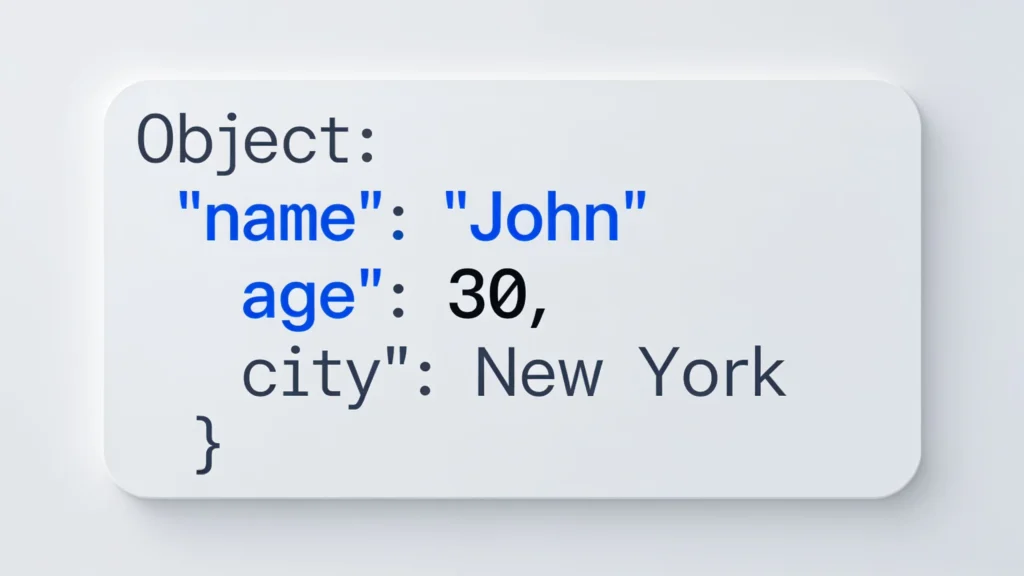
this.$emit('event-name', { property1: value1, property2: value2 });
This approach allows the parent to receive a comprehensive set of data in one go, streamlining the handling process.
Ultimately, the pattern of emitting events with payloads from child to parent is a fundamental aspect of Vue’s design philosophy, enabling developers to build interactive and dynamic user interfaces with ease. Understanding this mechanism is essential for creating responsive applications that adhere to Vue’s core principles of component-based architecture.