How to avoid memory leaks with closures in JavaScript

How to avoid memory leaks with closures in JavaScript

Effective management of closure references is crucial for preventing memory leaks in JavaScript applications. Techniques include nullifying unnecessary references, removing event listeners, and passing current values in loops. Utilizing WeakMaps for caching and encapsulating closures within modules enhances memory efficiency and control over lifecycle management.
How to use Chrome DevTools for memory profiling in JavaScript

How to use Chrome DevTools for memory profiling in JavaScript

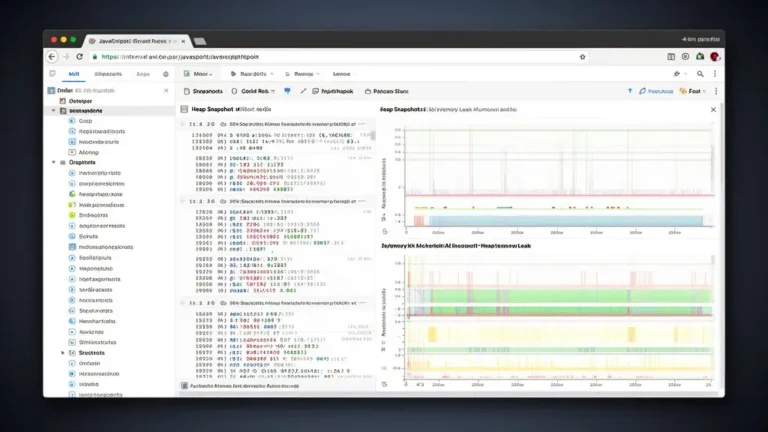
Memory leak detection involves identifying references that prevent garbage collection, using tools like Dominator Tree views in heap snapshots. Common issues include forgotten timers, closures retaining variables, and unreleased large data structures. Techniques include clearing references, WeakRefs, object pooling, and profiling allocations.
How to identify memory leaks in JavaScript

How to identify memory leaks in JavaScript

Memory leak prevention through effective coding practices is essential for optimal application performance. Key strategies include explicit component cleanup in SPAs, utilizing lifecycle methods in frameworks like React and Angular, avoiding global scope pollution, and leveraging WeakMaps for caching. Implementing these techniques ensures stable, efficient software.