How to deep clone complex objects in JavaScript

How to deep clone complex objects in JavaScript

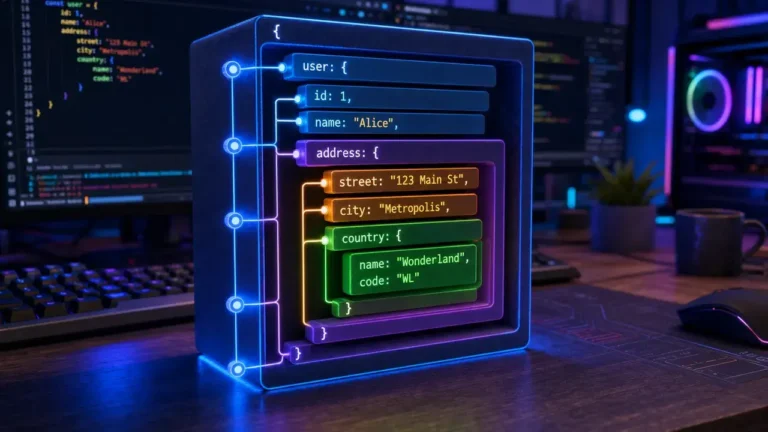
Reliable deep cloning solutions are essential for managing complex JavaScript objects. Libraries like lodash, rfdc, clone-deep, and flatted provide various functionalities for handling circular references, functions, and performance needs. Choose lodash for general cloning, rfdc for speed, clone-deep for complex structures, and flatted for serialization with cycles.
How to mock functions in Jest

How to delete a property from an object in JavaScript

Performance implications of the delete operator in JavaScript highlight the importance of alternatives like setting properties to null or undefined. Techniques such as object spread and libraries like lodash simplify property management while maintaining object integrity. Understanding these methods enhances code performance and stability.
How to update an object property in JavaScript

How to update an object property in JavaScript

Immutability is essential in state management, particularly with libraries like Redux. Avoid object mutation by creating new instances with updated values. Techniques such as the spread operator and deep cloning, using libraries like lodash, help maintain the original state. Property descriptors and performance considerations are also critical in managing object properties effectively.
How to clone an object with Lodash

How to clone an object with Lodash

Mastering deep cloning is essential for managing complex data structures, ensuring nested objects are treated independently. Key considerations include how cloning interacts with various data types, performance implications, and potential unexpected behaviors with intricate types like Dates and custom classes. Profiling and testing are crucial for avoiding bugs.