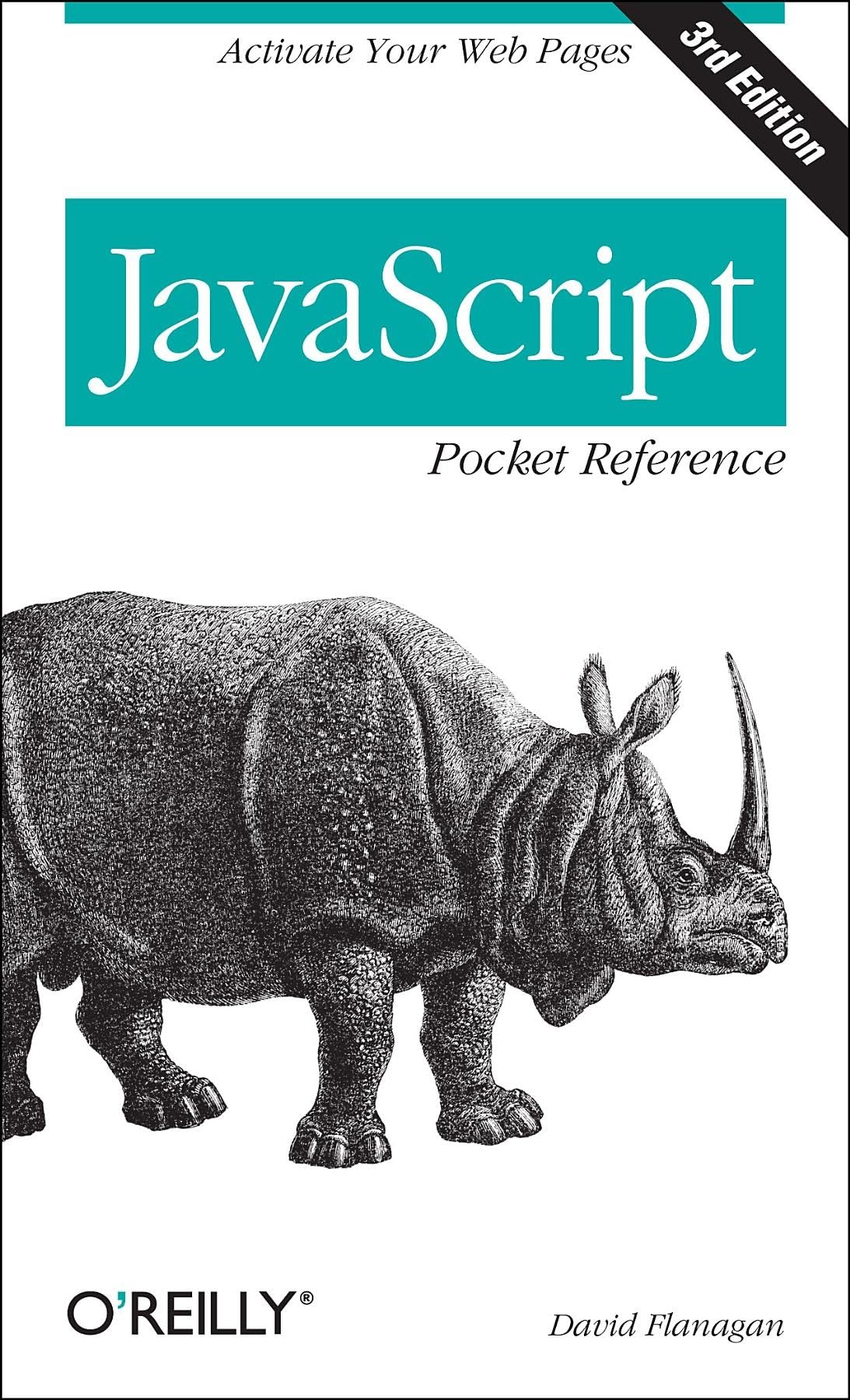
The world is drowning in JavaScript. Drowning in frameworks, in build tools, in configuration files that are longer than the application itself. It’s a swamp of complexity that most people just accept. They think this is what modern web development has to be. It’s nonsense.
Every now and then, you need a reminder that underneath all that fluff is a simple, powerful language. A language designed to make a web page do something new when you click a button. That’s it. That’s the magic. This book is a return to that. It’s not a 1,000-page tome on the virtues of the virtual DOM. It’s a pocket reference. The name says it all. It’s a tool, not a religion.
It’s designed to be on your desk for when you forget the exact order of arguments for `slice()` or the syntax for a regular expression. It’s a hammer, not a treatise on architectural theory. No churn, no hype. Just the fundamentals.
But let’s be brutally honest about one thing: this book is a time capsule. It was published in 2012. That’s a geological age in JavaScript years. That’s pre-ES6. Pre-`let` and `const`. Pre-arrow functions. Pre-native `Promise`. And say goodbye to `async/await`. The world it describes is a world dominated by jQuery and callback functions. It’s a snapshot of the language at a specific, and now quite distant, point in time.
So Who Is This Actually For?
- The Maintainer. You’ve inherited a legacy codebase from 2013. It’s full of `var`, immediately-invoked function expressions, and jQuery selectors. The book is your Rosetta Stone. It will help you understand the patterns and constraints of that era without the noise of modern syntax.
- The Pragmatist. You’re not building a single-page application. You’re working on a server-rendered app and just need to sprinkle in some interactivity. You need to hide a `div`, submit a form without a page refresh, or validate a field. The book has all the core DOM manipulation and language basics you need, without dragging you into a framework rabbit hole.
- The Digital Minimalist. You want to discover the core of the language and nothing else. You’re tired of tutorials that start with `npm install` and a dozen dependencies. This is pure, unadulterated JavaScript fundamentals from a simpler time.
And Who Should Stay Far, Far Away?
- The Absolute Beginner in 2024. If you are learning JavaScript from scratch *right now* to get a job, do not start here. You will learn patterns and syntax (`var` everywhere) that are considered bad practice today. You’ll be writing code that gets you laughed out of a code review.
- The Framework Developer. If your daily life is spent in React, Vue, or Svelte, this book is mostly irrelevant. It won’t help you with state management, component lifecycle, or the build toolchains you wrestle with. Your problems are on a different planet than the one this book describes.
- The Job Seeker. If you are cramming for a technical interview, the book will actively hurt you. The interviewer will ask about `async/await`, destructuring, and the difference between `let` and `const`. None of that is in here.
Think of it as a historical document with practical applications. It’s for the developer who needs to work with the past, not the one chasing the future. If you’re trying to build the next SPA-of-the-week with the trendiest new tools, that’s not the book for you. If you just need to get something done with the language itself, and maybe understand where it came from, it’s a perfectly solid little reference to have within arm’s reach.