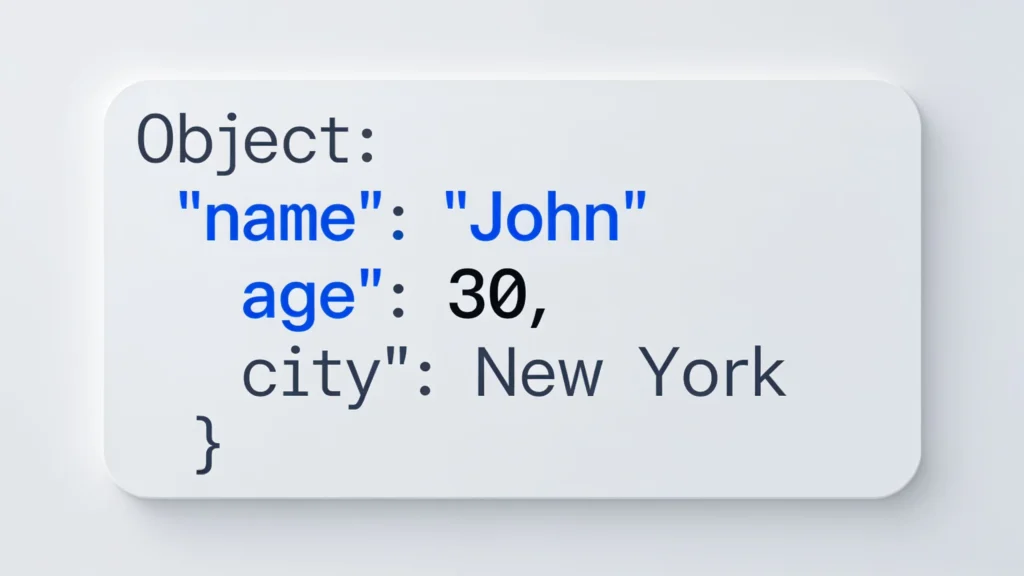
JavaScript’s class syntax provides a cleaner and more structured way to create objects and handle inheritance. It introduces the concept of classes, which serve as blueprints for creating objects. The syntax is quite similar to classes in other programming languages, making it easier for developers to adapt.
To define a class, you use the class keyword followed by the name of the class. Within the class, you can define a constructor, which is a special method that is called when a new instance of the class is created. This is where you can initialize instance properties.
class Person {
  constructor(name, age) {
    this.name = name;
    this.age = age;
  }
}
In the example above, we define a Person class with a constructor that takes two parameters. These parameters are used to initialize the instance properties name and age. When you create a new instance of the Person class, you can pass the values for these properties.
const person1 = new Person("Alice", 30);
console.log(person1.name); // Output: Alice
console.log(person1.age);  // Output: 30
This syntax is not just about creating objects, but also about establishing a clear structure for the code. It fosters better organization and makes it easier to manage complex systems. Additionally, JavaScript classes allow for inheritance, which is a powerful feature when it comes to extending the functionality of existing classes.
When you define a class, you can also add methods to it, which can operate on the instance properties. This encapsulation is a key aspect of object-oriented programming.
class Person {
  constructor(name, age) {
    this.name = name;
    this.age = age;
  }

  greet() {
    return Hello, my name is ${this.name} and I am ${this.age} years old.;
  }
}
With the greet method, every instance of Person can invoke this method to get a greeting message. This is a simple yet effective way to bundle behavior with data, enhancing the clarity of the code.
Furthermore, JavaScript classes support the extends keyword for inheritance, allowing a class to inherit properties and methods from another class. This promotes code reuse and helps in building a hierarchy of classes.
class Employee extends Person {
  constructor(name, age, jobTitle) {
    super(name, age);
    this.jobTitle = jobTitle;
  }

  describeJob() {
    return I work as a ${this.jobTitle}.;
  }
}
In the Employee class, we call the super function to access the constructor of the parent class, Person. This ensures that the name and age properties are initialized properly. The describeJob method provides additional functionality specific to the Employee class.

HDMI Cable 6.6 ft, Highwings 4K HDMI 2.0 Cord with Ultra HD Stunning Clarity, Nylon Braided & Gold-Plated Connectors, HDR, Ethernet, ARC, 3D, HDCP 2.2, Compatible with for Wall-mounted HDTV , Monitor
$6.69 (as of July 20, 2026 03:55 GMT +00:00 - More infoProduct prices and availability are accurate as of the date/time indicated and are subject to change. Any price and availability information displayed on [relevant Amazon Site(s), as applicable] at the time of purchase will apply to the purchase of this product.)Defining instance methods for class behavior
Instance methods defined within a class are placed on the prototype of the created objects. This means that all instances share the same method, conserving memory and ensuring consistent behavior.
Consider the following example where we add a method to calculate the birth year based on the current age:
class Person {
  constructor(name, age) {
    this.name = name;
    this.age = age;
  }

  greet() {
    return Hello, my name is ${this.name} and I am ${this.age} years old.;
  }

  birthYear(currentYear) {
    return currentYear - this.age;
  }
}
When you create instances of this class, the birthYear method can be called on each object, but the method itself is not duplicated across instances.
const person1 = new Person("Bob", 40);
console.log(person1.greet());               // Hello, my name is Bob and I am 40 years old.
console.log(person1.birthYear(2024));       // 1984

const person2 = new Person("Carol", 25);
console.log(person2.greet());               // Hello, my name is Carol and I am 25 years old.
console.log(person2.birthYear(2024));       // 1999
This prototype sharing is crucial for performance, especially when many instances are created. Defining methods inside the constructor, for example by assigning functions to this, would create a new function object for each instance, which is less efficient.
It’s also worth noting that these instance methods can access all instance properties directly via this. This tight coupling of data and behavior within the class instance is what enables encapsulation.
Another point is that instance methods can be used as callbacks, but care must be taken with the this binding. Since methods are called on the instance, this points to the instance; however, if you extract the method reference and call it separately, this may become undefined or point elsewhere.
class Logger {
  log(message) {
    console.log([${this.prefix}] ${message});
  }

  constructor(prefix) {
    this.prefix = prefix;
  }
}

const logger = new Logger("DEBUG");
logger.log("Starting up...");  // [DEBUG] Starting up...

const logFn = logger.log;
logFn("This will fail");       // TypeError or undefined prefix because 'this' is lost
To avoid this, you can either bind the method explicitly or use arrow functions assigned in the constructor (though the latter duplicates the function per instance). Binding is typically done like this:
class Logger {
  constructor(prefix) {
    this.prefix = prefix;
    this.log = this.log.bind(this);
  }

  log(message) {
    console.log([${this.prefix}] ${message});
  }
}

const logger = new Logger("DEBUG");
const logFn = logger.log;
logFn("This works now");       // [DEBUG] This works now
Defining instance methods using the class syntax thus balances clarity, memory efficiency, and behavior encapsulation. It also aligns with JavaScript’s prototypal inheritance under the hood, making it a natural extension rather than a complete abstraction.
When it comes to private data, JavaScript now supports private instance methods and fields using the hash # prefix. This restricts access to within the class body only:
class Counter {
  #count = 0;

  increment() {
    this.#count++;
  }

  getCount() {
    return this.#count;
  }
}
Attempting to access #count from outside the class will result in a syntax error, enforcing encapsulation more strictly than the traditional convention of prefixing with an underscore.
Instance methods can also call other instance methods within the same class using this. This enables composition of behavior without exposing all details externally.
class Rectangle {
  constructor(width, height) {
    this.width = width;
    this.height = height;
  }

  area() {
    return this.width * this.height;
  }

  isSquare() {
    return this.width === this.height;
  }

  describe() {
    if (this.isSquare()) {
      return A square with side ${this.width};
    } else {
      return A rectangle ${this.width} by ${this.height};
    }
  }
}
Here, the describe method depends on isSquare, demonstrating how instance methods can build on each other to produce richer behavior.
Instance methods can also be async, allowing you to handle asynchronous operations naturally within class instances:
class DataFetcher {
  constructor(url) {
    this.url = url;
  }

  async fetchData() {
    const response = await fetch(this.url);
    if (!response.ok) {
      throw new Error('Network error');
    }
    return await response.json();
  }
}
This pattern integrates async behavior seamlessly into the object model, making classes suitable for real-world tasks involving I/O.
The ability to define instance methods inside the class body is a powerful feature of JavaScript’s class syntax. It encourages encapsulation, promotes code reuse via prototypes, and provides a familiar structure for developers coming from classical OOP languages. However, it’s important to remember that under the hood, these classes are still functions and prototypes, so understanding that model helps in debugging and advanced use cases.
Next, we will explore how static methods differ from instance methods and how they can be used to provide utility functions related to the class but not tied to any specific object instance.
Adding static methods for utility functions
Static methods in JavaScript classes are methods that belong to the class itself, rather than to any instance of the class. They are defined using the static keyword within the class body. This means you call them directly on the class, not on an object created from the class.
The primary use case for static methods is to provide utility functions that are related to the class conceptually but do not operate on individual instances. For example, they can be factory methods, helpers, or functions that operate on class-level data.
class MathUtils {
  static square(x) {
    return x * x;
  }

  static cube(x) {
    return x * x * x;
  }
}
Here, square and cube are static methods. You invoke them on the class itself, not on an instance:
console.log(MathUtils.square(5));  // 25
console.log(MathUtils.cube(3));    // 27

const utils = new MathUtils();
console.log(utils.square);          // undefined
Attempting to call a static method on an instance will result in undefined, because static methods are not available on the prototype or instance objects. They exist solely on the constructor function object.
Static methods can also be used as factory methods to create instances with some custom initialization logic:
class Person {
  constructor(name, age) {
    this.name = name;
    this.age = age;
  }

  static fromBirthYear(name, birthYear) {
    const currentYear = new Date().getFullYear();
    return new Person(name, currentYear - birthYear);
  }
}

const person = Person.fromBirthYear('Diana', 1990);
console.log(person.name);  // Diana
console.log(person.age);   // (currentYear - 1990)
This pattern encapsulates the logic for creating instances in a way that might be more expressive or convenient than using the constructor directly. It also keeps the instance creation logic centralized and consistent.
Static methods can call other static methods on the same class using this because within a static method, this refers to the class itself:
class Converter {
  static toUpperCase(str) {
    return str.toUpperCase();
  }

  static shout(str) {
    return this.toUpperCase(str) + '!';
  }
}

console.log(Converter.shout('hello'));  // HELLO!
This allows for modularity and reuse of static utility functions within the class scope.
It’s worth noting that static methods cannot access instance properties or methods directly because they don’t operate on an instance. Trying to use this to access instance members inside a static method will not work as expected:
class Example {
  constructor(value) {
    this.value = value;
  }

  static showValue() {
    // 'this' here references the class, not an instance
    console.log(this.value);  // undefined
  }
}

const e = new Example(123);
Example.showValue();  // undefined
If you need to work with instance data, static methods generally accept instances as arguments:
class Example {
  constructor(value) {
    this.value = value;
  }

  static showValue(instance) {
    console.log(instance.value);
  }
}

const e = new Example(123);
Example.showValue(e);  // 123
Static properties can also be defined, although this is less common. Using class fields syntax, you can declare static properties directly:
class Counter {
  static count = 0;

  static increment() {
    this.count++;
  }

  static getCount() {
    return this.count;
  }
}

Counter.increment();
Counter.increment();
console.log(Counter.getCount());  // 2
This can be useful for tracking data shared across all instances, or for caching purposes related to the class as a whole.
One subtlety to keep in mind is that subclasses inherit static methods and properties from their parent classes. This means you can override or extend static behavior in subclasses:
class Animal {
  static kingdom() {
    return 'Animalia';
  }
}

class Dog extends Animal {
  static bark() {
    return 'Woof!';
  }
}

console.log(Dog.kingdom());  // Animalia
console.log(Dog.bark());     // Woof!
In this example, Dog inherits the static method kingdom from Animal and also defines its own static method bark. This inheritance of static members can be leveraged to build utility hierarchies that mirror the instance inheritance tree.
Static methods are also useful as namespace holders to group related functionality without polluting the global scope or requiring separate modules. They provide a neat way to organize code around class concepts rather than loose functions.
It’s important to understand that static methods do not have access to instance-specific data unless explicitly passed an instance. This clear separation of concerns helps maintain predictable behavior and avoids accidental coupling between class-level logic and instance state.
When combining static methods with inheritance, you can override static methods in subclasses to provide specialized behavior. For example:
class Vehicle {
  static info() {
    return 'Vehicles transport people or goods.';
  }
}

class Car extends Vehicle {
  static info() {
    return super.info() + ' Cars have four wheels.';
  }
}

console.log(Vehicle.info());  // Vehicles transport people or goods.
console.log(Car.info());      // Vehicles transport people or goods. Cars have four wheels.
Using super inside static methods refers to the superclass, allowing you to extend or modify static behaviors elegantly.
In summary, static methods provide a versatile mechanism to attach class-level behavior and utilities. They complement instance methods by separating concerns between operations that require instance data and those that do not. Understanding when to use static methods versus instance methods is key to designing clear and maintainable class APIs.
Moving forward, we will examine how to extend classes through inheritance, adding new methods and overriding existing ones to build richer, more specialized types that leverage the power of the class hierarchy.
Extending classes and adding methods through inheritance
Inheritance in JavaScript classes allows you to create a new class based on an existing one, extending its capabilities while reusing its code. The extends keyword establishes this relationship, where the subclass inherits all the instance properties and methods of the superclass.
When you extend a class, you can add new methods or override existing ones to tailor behavior specific to the subclass. This is fundamental for building hierarchies of related types while keeping the codebase maintainable and DRY (Don’t Repeat Yourself).
Consider the following example where we extend the Employee class to create a Manager class that adds new responsibilities:
class Manager extends Employee {
  constructor(name, age, jobTitle, department) {
    super(name, age, jobTitle);
    this.department = department;
  }

  describeJob() {
    return ${super.describeJob()} I manage the ${this.department} department.;
  }

  scheduleMeeting(time) {
    return Meeting scheduled at ${time} for the ${this.department} department.;
  }
}
Here, the Manager class calls super in its constructor to initialize inherited properties from Employee. It overrides the describeJob method, enhancing the original message by invoking super.describeJob() and appending additional information. This technique preserves the base behavior while extending it.
Adding new methods like scheduleMeeting introduces functionality unique to the Manager subclass without affecting the parent class or other subclasses. Instances of Manager will have access to both inherited and new methods:
const mgr = new Manager("Eve", 45, "Team Lead", "Engineering");
console.log(mgr.greet());            // Hello, my name is Eve and I am 45 years old.
console.log(mgr.describeJob());      // I work as a Team Lead. I manage the Engineering department.
console.log(mgr.scheduleMeeting("10 AM")); // Meeting scheduled at 10 AM for the Engineering department.
Overriding methods is a common pattern to specialize behavior. The super keyword inside methods allows access to the parent class’s implementation, providing a way to build upon or modify it rather than completely replacing it.
Inheritance is not limited to instance methods. Static methods are also inherited and can be overridden similarly:
class Animal {
  static sound() {
    return 'Some generic animal sound';
  }
}

class Cat extends Animal {
  static sound() {
    return 'Meow';
  }
}

console.log(Animal.sound());  // Some generic animal sound
console.log(Cat.sound());     // Meow
This example demonstrates how subclassing can refine static behavior, just as with instance methods.
When extending built-in classes like Array or Error, the same principles apply, but there are some caveats related to internal behavior and prototype chains. For example, extending Error requires calling super(message) in the constructor and setting the name property explicitly to maintain expected behavior:
class CustomError extends Error {
  constructor(message) {
    super(message);
    this.name = 'CustomError';
  }
}

try {
  throw new CustomError('Something went wrong');
} catch (e) {
  console.log(e.name);    // CustomError
  console.log(e.message); // Something went wrong
}
Extending built-in types can be powerful, but it’s important to test thoroughly to ensure the subclass behaves as expected in all contexts.
JavaScript’s class inheritance ultimately leverages the prototype chain. The subclass prototype’s internal [[Prototype]] points to the superclass prototype, enabling instance methods to be looked up along the chain. Similarly, the subclass constructor function’s [[Prototype]] points to the superclass constructor, supporting static inheritance.
One subtlety is that the super keyword behaves differently depending on context: inside constructors, it calls the parent constructor; inside methods, it accesses methods on the parent prototype; and inside static methods, it refers to the parent class itself. Understanding this is key to effectively using inheritance.
You can also add new methods to a subclass prototype after its declaration, just like with normal classes:
class Vehicle {
  start() {
    return 'Vehicle starting';
  }
}

class Bike extends Vehicle {}

Bike.prototype.ringBell = function() {
  return 'Ring ring!';
};

const bike = new Bike();
console.log(bike.start());    // Vehicle starting
console.log(bike.ringBell()); // Ring ring!
This flexibility allows incremental enhancement of classes, although it’s generally cleaner to define methods inside the class body for readability and maintainability.
When overriding methods, you can choose to completely replace the parent method or call it conditionally. For example:
class Logger {
  log(message) {
    console.log(message);
  }
}

class TimestampLogger extends Logger {
  log(message) {
    const timestamp = new Date().toISOString();
    super.log([${timestamp}] ${message});
  }
}

const logger = new TimestampLogger();
logger.log('Hello world');  // [2024-06-01T12:34:56.789Z] Hello world
This pattern is common for adding cross-cutting concerns like logging, validation, or formatting without duplicating base logic.
Inheritance can be chained indefinitely, enabling deep hierarchies:
class Animal {
  speak() {
    return '...';
  }
}

class Dog extends Animal {
  speak() {
    return 'Woof';
  }
}

class GuardDog extends Dog {
  speak() {
    return super.speak() + '! Stay away!';
  }
}

const guard = new GuardDog();
console.log(guard.speak());  // Woof! Stay away!
However, deep inheritance chains can become difficult to manage and understand. It’s often better to favor composition or mixins unless a clear “is-a” relationship exists.
In summary, extending classes via inheritance in JavaScript provides a powerful mechanism for code reuse and specialization. By leveraging super, overriding methods, and adding new behavior, you can build rich and expressive class hierarchies that map well to real-world domains and problem spaces.