Many programmers learn JavaScript through a kind of osmosis—absorbing patterns from online tutorials, framework documentation, and snippets copied from Stack Overflow. This approach can get you to a working application, but it often leaves a swiss cheese-like-foundation in your understanding of the language itself. You end up with code that works by coincidence, not by design, a practice often called “voodoo programming.” When it breaks, you have little recourse but to shake the metaphorical rattle and hope the magic returns.
The cost of this shallow understanding is paid over the entire lifecycle of a project. It manifests as time lost to debugging strange behaviors, code this is difficult for others (or your future self) to read and modify, and a persistent feeling of fighting the language rather than commanding it. Professional software construction demands a more rigorous approach.
Building a Proper Foundation
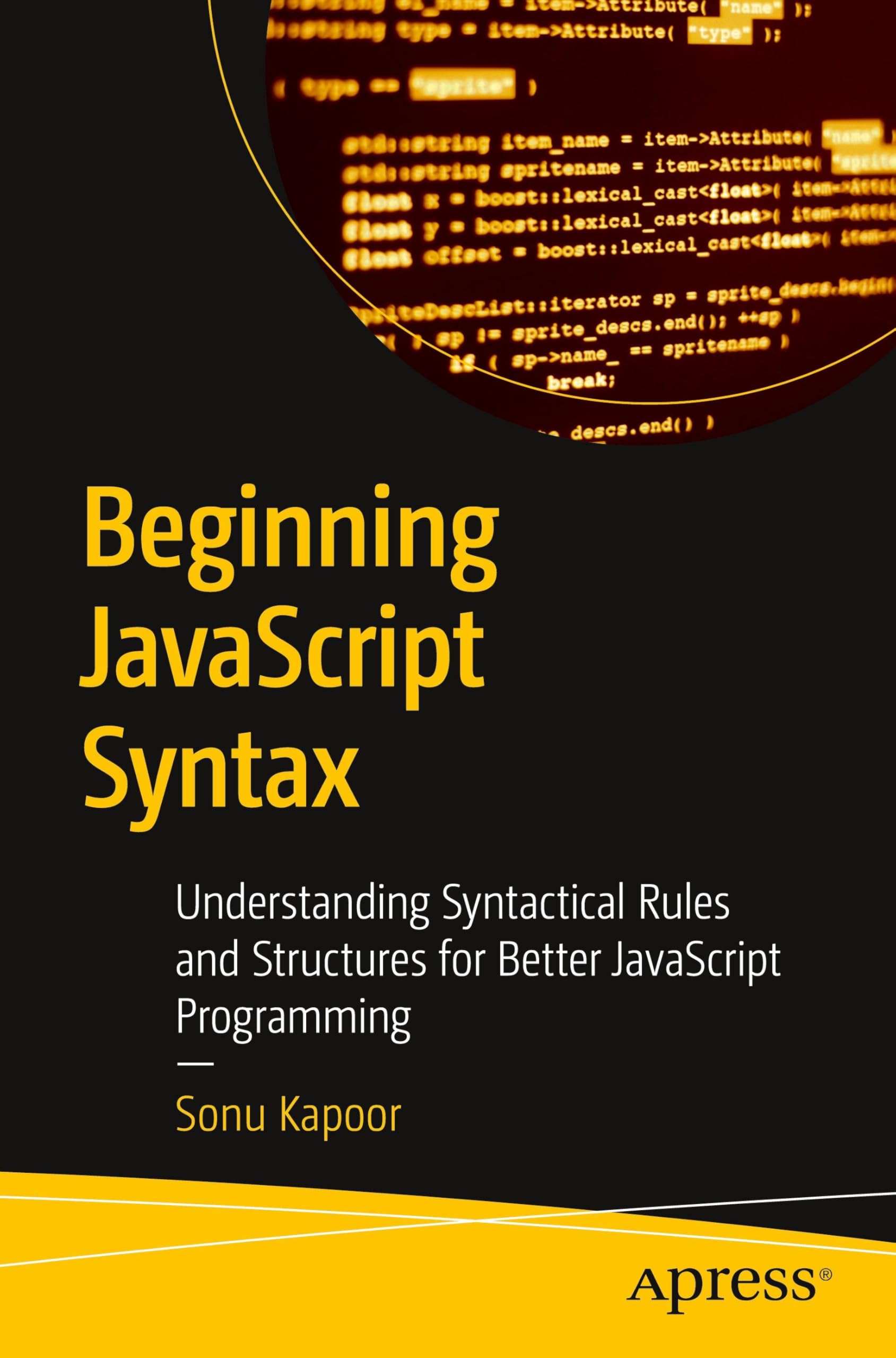
This book, “Beginning JavaScript Syntax,” appears to be a direct remedy for that common ailment. Its focus isn’t on building a to-do list with the latest framework; its focus is on the meticulous, foundational work of understanding the language’s “rules of construction.” This is analogous to an architect studying the tensile strength of steel and the load-bearing properties of concrete before designing a skyscraper. Without that fundamental knowledge, the entire enterprise is at risk.
By concentrating on the syntactical rules and structures, you’re not just memorizing keywords; you’re building the intellectual tools needed to write code that’s clear, predictable, and maintainable. Understanding syntax deeply means you can express your logical intentions precisely, leaving little room for the kinds of ambiguity that create bugs.
Who Should Pay Close Attention to This?
The value of this foundational approach isn’t the same for everyone. Based on its stated purpose, the book seems most beneficial for a few specific kinds of developers:
- The True Beginner. If you’re new to programming and starting with JavaScript, that’s an exceptionally valuable way to begin. Learning the syntax with discipline from the outset prevents the formation of bad habits that are notoriously difficult to unlearn. You will build your knowledge on bedrock instead of sand.
- The Self-Taught Developer Turning Pro. You’ve cobbled together a few projects and can get things to work. However, you often find yourself mystified by why `this` behaves differently in different contexts, or why `==` and `===` produce different results. The book is for you. It will help you systematically fill in the gaps and replace “it just works” with “it works because…” This transition from guesswork to deliberate construction is a hallmark of professionalism.
- The Experienced programmer from Another Language. If you’re coming from a background in Java, C#, or C++, you might be tempted to skim a quick “JavaScript for Java Developers” guide. That is a classic mistake. While the syntax looks familiar, JavaScript’s underlying mechanics—prototypal inheritance, type coercion, and event-driven concurrency model—are profoundly different. A focused study on its syntax and structure, as this book provides, is an efficient investment to avoid costly and frustrating errors down the line.
Mastering a language’s syntax is not the most glamorous part of software development, but it is the most essential. It’s the prerequisite for quality. A book that systematically drills down on these fundamentals provides a clear, methodical path toward a higher level of craftsmanship in your JavaScript code.