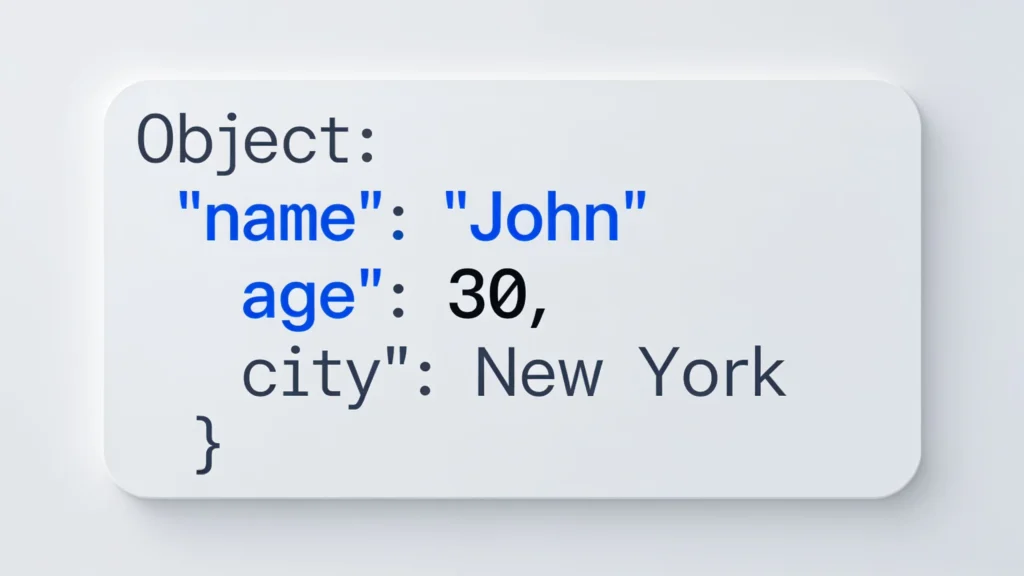
JavaScript, while powerful, can sometimes behave like an unruly child. If your code is blocking the main thread, it’s essentially holding up the entire show. The first thing to consider is whether you’re using synchronous code when you really should be using asynchronous code. This is where promises and async/await come into play, allowing you to write cleaner, more efficient code without blocking the execution of other scripts.
function fetchData(url) {
  return new Promise((resolve, reject) => {
    const xhr = new XMLHttpRequest();
    xhr.open("GET", url);
    xhr.onload = () => resolve(xhr.responseText);
    xhr.onerror = () => reject(new Error("Network Error"));
    xhr.send();
  });
}

async function getData() {
  try {
    const data = await fetchData("https://api.example.com/data");
    console.log(data);
  } catch (error) {
    console.error(error);
  }
}
When you wrap your asynchronous operations in promises, you can avoid blocking the event loop, which is essential for a smooth user experience. Take a good look at how you’re managing events, especially if you’re dealing with user interactions that require immediate feedback. If your script is taking too long, users might think the application is frozen.
document.getElementById("submitButton").addEventListener("click", async function() {
  this.disabled = true; // Prevent double submission
  await getData();
  this.disabled = false; // Re-enable button after completion
});
Additionally, always be cautious with how you handle large data sets. If you’re processing a significant amount of data, consider using Web Workers. They allow you to run scripts in background threads, meaning your main thread remains responsive to user input while heavy computations are offloaded.
const worker = new Worker("worker.js");

worker.onmessage = function(event) {
  console.log("Data processed: ", event.data);
};

worker.postMessage(largeDataSet);
In your worker.js, you can handle the data processing without blocking the UI:
self.onmessage = function(event) {
  const result = processData(event.data);
  self.postMessage(result);
};

function processData(data) {
  // intensive calculations here
}
This way, you ensure that your script is not just efficient but also respectful of the user’s experience. Remember, when users feel your application is responsive, they are more likely to engage with it. However, if they experience delays, even the most sophisticated features can feel sluggish and uninviting. It’s crucial to keep your scripts polite.
Another common pitfall is the use of heavy libraries and frameworks that add unnecessary weight to the client-side. If your users are on mobile devices or slow connections, every kilobyte counts. Consider lighter alternatives or even vanilla JavaScript for simple tasks. For instance, instead of loading a full library just to manipulate the DOM, you can achieve the same with pure JS.
document.querySelector("#myElement").textContent = "Updated Text";
It’s these little optimizations that can make a world of difference. Ultimately, the goal is to make your JavaScript not just functional, but also efficient and user-friendly. If your script is rude, it’s not just you who suffers-your users will too. So, take a step back, evaluate your code, and ask if it’s really serving your users effectively. The more you can do to streamline your code, the better the overall experience will be.

Sport Band Compatible with Apple Watch Bands 49mm 46mm 45mm 44mm 42mm 41mm 40mm 38mm, Soft Silicone Replacement Strap with Classic Clasp for iWatch Series 11 10 9 8 7 6 5 4 3 2 1 SE Ultra Women Men
$9.99 (as of July 20, 2026 03:55 GMT +00:00 - More infoProduct prices and availability are accurate as of the date/time indicated and are subject to change. Any price and availability information displayed on [relevant Amazon Site(s), as applicable] at the time of purchase will apply to the purchase of this product.)Stop shipping code your users will never run
It’s a simple, brutal calculus: every line of code you ship to a user’s browser that never gets executed is a waste. It’s a waste of their bandwidth, a waste of their device’s memory and CPU cycles to parse it, and most importantly, a waste of their time. You wouldn’t pack a snowsuit for a trip to the Sahara, so why are you sending the code for your admin-only reporting dashboard to every single visitor who just wants to read your “About Us” page? The monolithic JavaScript bundle is the enemy of performance.
The solution is a strategy called code splitting. Instead of one giant app.js, your bundler (you are using a bundler like Webpack, Rollup, or Vite, right?) can be configured to create smaller, logical chunks of code. The initial chunk contains only the bare essentials needed for the user’s first view. Then, as they navigate and interact, you can load additional chunks on demand. The modern way to do this is with dynamic import(), which returns a promise.
const settingsButton = document.getElementById("settings-btn");

settingsButton.addEventListener("click", () => {
  import("/modules/settings.js")
    .then(settingsModule => {
      // The module has loaded, now we can use its exports
      settingsModule.initializeSettingsPanel();
    })
    .catch(error => {
      console.error("Failed to load the settings module.", error);
    });
});
This is not just a theoretical optimization. For a user on a flaky 3G connection, the difference between loading a 150KB initial bundle and a 1.5MB one is the difference between them using your app and them closing the tab in frustration. You are delivering code “just-in-time” instead of “just-in-case”. This is especially critical for features that only a subset of users will ever access, like complex data visualization tools, specialized forms, or third-party integrations.
But even within the code you *do* load, there’s likely a lot of fat. You might import a utility library but only use two of its fifty functions. This is where tree-shaking comes into play. Modern bundlers, when configured correctly, can analyze your ES module imports and exports to determine which code is actually being used. Any exported function, class, or variable that is never imported by another module is considered “dead code” and is shaken out of the final bundle, as if from a dead tree.
// utils.js
export function formatCurrency(value) {
  // ... implementation
}

export function validateEmail(email) {
  // ... implementation
}

// main.js
import { validateEmail } from "./utils.js";

const email = "[email protected]";
if (validateEmail(email)) {
  // ... do something
}

// In the final production bundle, the code for formatCurrency
// will be eliminated because it was never imported.
However, tree-shaking is not foolproof. It relies on static analysis, meaning it can’t run your code to see what happens. If you write code with side effects at the module level-for example, a module that modifies a global object or attaches a CSS stylesheet to the DOM just by being imported-the bundler will often have to conservatively include the entire module, because it can’t prove that removing it wouldn’t break something. To make your code tree-shakable, you must strive to keep your modules pure and side-effect-free, exporting functions that can be called explicitly rather than doing work upon import.