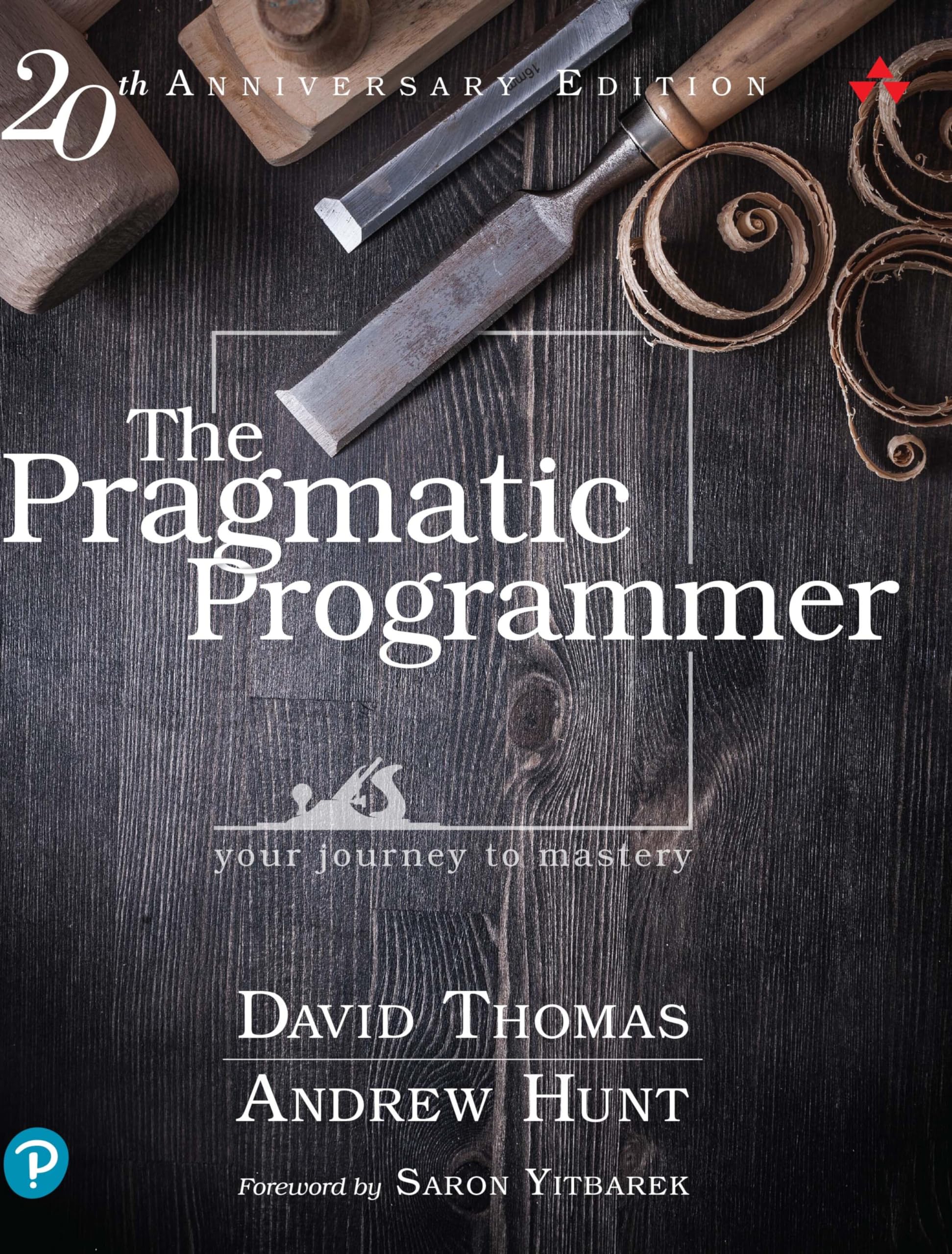
The software world is obsessed with the new. The next hot framework, the next revolutionary tooling, the next “paradigm-shifting” architecture. It’s a constant churn that burns people out, and most of it’s just noise. It’s fashion, not fundamentals. And it distracts from the real work: the craft of building good software.
The book is the antidote. And this new edition is sharper than ever.
This isn’t a book about the flavor-of-the-month JavaScript library or some esoteric language feature. It’s about the bedrock. The habits, philosophies, and techniques that separate professional programmers from people who just write code. It’s the stuff that was true 20 years ago and will still be true 20 years from now. It’s about being effective, pragmatic, and proud of your work.
So, who is this for?
Frankly, almost every developer could use a dose of this. But let’s get specific.
For the new developer
You’re fresh out of a bootcamp or college. You’re overwhelmed. People are throwing acronyms at you and telling you “that’s just how we do things.” Stop. Read the book first. It will give you a foundation of sanity. It will teach you how to think like a programmer, not just how to type. It is the senior-level mentor you wish you had, distilled into 300-odd pages. It will save you years of learning things the hard way.
For the journeyman stuck on a plateau
You’ve been at this for 3-7 years. You know your stack, you can close tickets. But you feel like you’re just turning a crank. Your code works, but it’s brittle. You fight the same fires over and over. The book will knock you out of that rut. It will challenge your ingrained habits and force you to be more deliberate. It will reconnect you with the craft and show you the path from just being a coder to being a software engineer.
For the grizzled veteran and team lead
You’ve seen it all. You might even think you don’t need this. You’re wrong. First, it’s the perfect refresher on the first principles you might have let slide while fighting corporate battles. Second, it’s the single best book you can hand to every new person on your team. It gives you a shared vocabulary and set of values for what “good” looks like. Instead of saying “Your code is hard to change,” you can talk about orthogonality. It codifies the culture you want to build.
What you actually get
Forget a dry textbook. That is a collection of direct, actionable tips. Some of my favorites that feel more relevant than ever:
- Don’t Live with Broken Windows. A simple, powerful metaphor for quality. Small bits of rot fester and spread. Fix them. Immediately. It’s about maintaining standards.
- Tracer Bullets. Don’t build the whole system in the dark. Build a thin slice that goes end-to-end to make sure your architecture actually works before you commit to it. This is the opposite of the “Big Design Up Front” nonsense.
- Orthogonality. That is a key concept that most juniors miss. Making your components decoupled and independent, so a change in one place doesn’t cause a cascade of failures elsewhere. It is the secret to software that’s easy to change.
- Programming by Coincidence. The book gives a name to that feeling you have when you see code that *happens* to work, but no one knows why. It teaches you to be deliberate, not accidental.
The industry is full of people selling complexity. They profit from you thinking that things have to be hard. The book is the opposite. It’s a guide to simplicity, clarity, and the enduring craft of programming. It’s not about theory; it’s about what works in the trenches.
Read it. Then read it again in five years. You’ll find something new each time. Highly recommended.