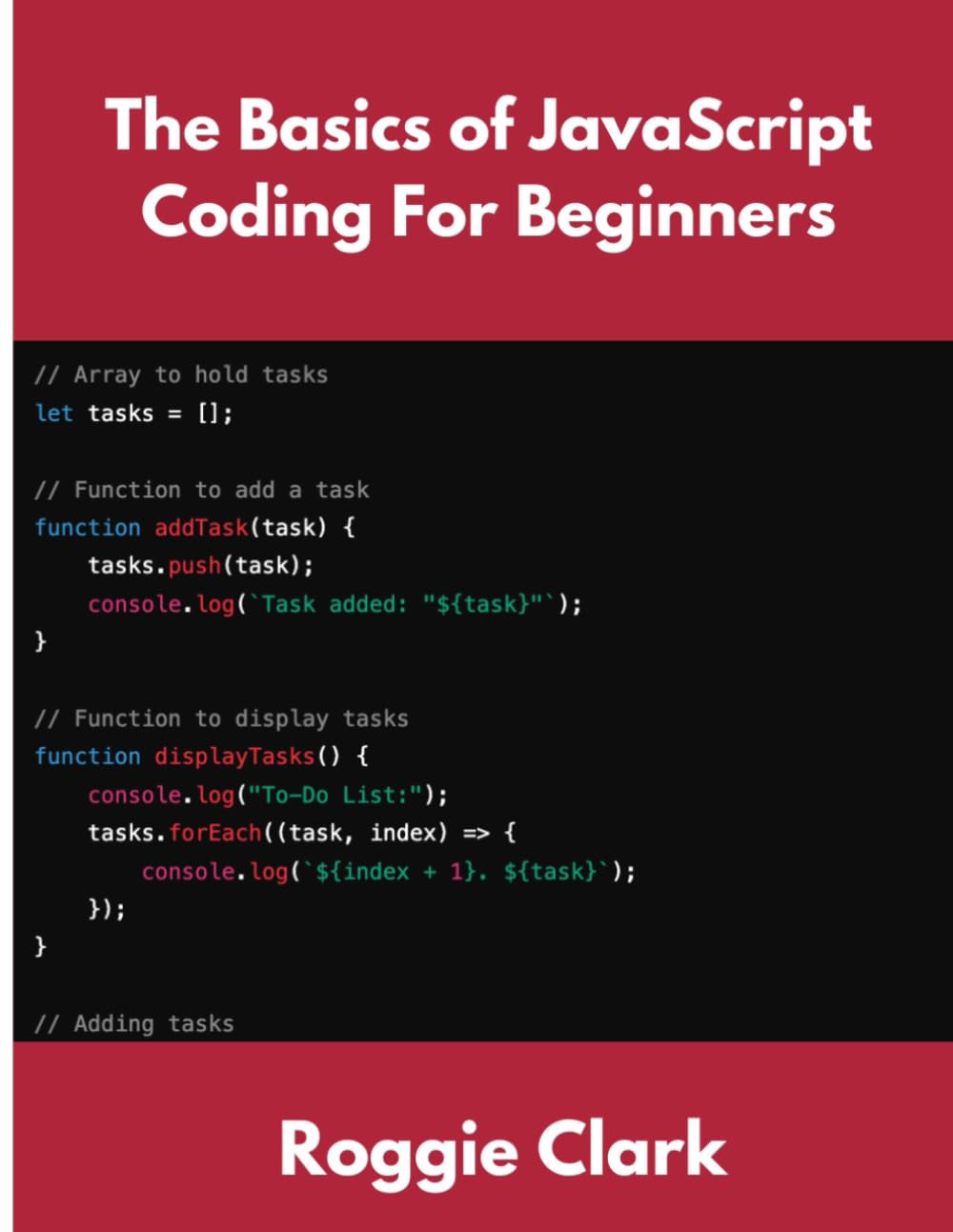
So you’re looking at this little book on JavaScript.
There’s a fascinating moment when you first start to see the machine for what it is. Not a magic box, but a stunningly fast and literal-minded executor of instructions. You tell it to put a value in a box, label it ‘x’, and it does. You tell it to check if ‘x’ is greater than 5 and do something else if it is, and it does. That shift, from user to commander, is the whole game. Getting to that first “a-ha!” moment is the hardest part of the entire journey.
Let’s be perfectly clear about what that is. At under 50 pages, this book isn’t going to teach you how to write a physics engine or a client-side rendering framework. It can’t. To truly understand the performance implications of the V8 engine, the nuances of the event loop, or the full power of modern ECMAScript, you need to go deep. That takes time, experimentation, and diving into code that pushes the metal.
This book isn’t for that. It’s for something else entirely—that very first step. It’s about getting you over the initial peak of intimidation, the “I don’t even know what to type” phase. It’s a primer. A vocabulary builder. A way to dip your toes in the water without having to commit to swimming the English Channel.
Who is this really for?
- You are standing at ground zero. The words ‘variable’, ‘function’, and ‘loop’ are abstract concepts you’ve heard but can’t quite grasp. You need a foothold.
- You’ve looked at 800-page tomes on coding and your brain immediately shut down. The sheer volume was the enemy.
- You are a designer, manager, or marketer who works with developers. You don’t need to write the code, but you desperately want to understand the fundamental building blocks they talk about all day.
- You need a quick confidence boost. A single weekend read that lets you write your first few lines of code and see them *work*, providing the momentum to tackle a bigger, more comprehensive resource next.
What will you likely walk away with?
- A mental model for what a ‘variable’ actually is: a named bucket in a vast warehouse of memory.
- The basic concept of control flow: making the computer make a decision with an if statement.
- An understanding of what a ‘function’ represents: a reusable block of instructions that you can name and call upon at will.
- The satisfaction of making an alert pop up or changing some text on a page, proving to yourself that you *can* command the machine.
Think of it as a pre-flight checklist, not the flight manual itself. It’s designed to make sure you know what the most critical dials and levers are before you even think about taking off. If you already know how to fly, this isn’t for you. But if you’re standing on the tarmac just trying to figure out how to open the cockpit door, a short guide that points you straight to the handle can be exactly what you need to get started.