JavaScript runs in a unique environment that can be quite different from traditional programming languages. It’s important to understand how this environment works to effectively leverage its capabilities. The core of the execution model is the event loop, which handles asynchronous operations and allows JavaScript to perform non-blocking I/O. This means that while one task is being processed, the engine can continue to handle other tasks.
At the center of this is the call stack, which keeps track of function execution. When a function is called, it gets pushed onto the stack. When the function completes, it’s popped off the stack. Understanding how the call stack operates especially important for debugging and performance optimization.
function first() {
  console.log("First function");
  second();
}

function second() {
  console.log("Second function");
}

first();
In this example, calling first() initiates the stack. It logs “First function” and then calls second(), which gets pushed onto the stack and logs “Second function”. Once second() completes, it’s removed from the stack, and control returns to first(), which then completes. This simpler flow is what enables the synchronous nature of JavaScript.
However, the real magic happens with asynchronous functions, particularly with the use of callbacks, promises, and async/await syntax that allows for more readable asynchronous code. A simple example of a callback would be:
function fetchData(callback) {
  setTimeout(() => {
    console.log("Data fetched");
    callback();
  }, 1000);
}

fetchData(() => {
  console.log("Callback executed");
});
In this code, fetchData simulates data fetching with a timeout. Once the data is “fetched,” it calls the provided callback function. That’s the essence of non-blocking behavior, allowing the JavaScript engine to perform other tasks while waiting for the data to be ready.
Promises further enhance this asynchronous model. They provide a cleaner syntax and better error handling. Here’s how you might implement a simple promise:
function fetchData() {
  return new Promise((resolve, reject) => {
    setTimeout(() => {
      const success = true; // Simulate success or failure
      if (success) {
        resolve("Data fetched");
      } else {
        reject("Error fetching data");
      }
    }, 1000);
  });
}

fetchData()
  .then(data => console.log(data))
  .catch(error => console.error(error));
This example encapsulates the asynchronous operation within a promise. The fetchData function returns a new promise that resolves after a timeout. The .then() method is called when the promise resolves successfully, while .catch() handles any errors that occur. This structure provides a more manageable way to deal with asynchronous logic compared to traditional callbacks.
Understanding the execution environment also involves recognizing the global context. In a browser, the global object is window, and variables declared outside functions become properties of this object. This can lead to unintentional global variable creation, which can cause hard-to-track bugs. To avoid this, using strict mode is advisable:
"use strict";

function myFunction() {
  x = 3.14; // This will throw an error
}
With strict mode enabled, any attempt to assign a value to an undeclared variable will result in a runtime error, helping catch potential issues early. This is particularly vital in larger applications where global scope pollution can lead to conflicts and unexpected behavior.
As you delve deeper into JavaScript’s execution context, keep in mind closures, which allow functions to retain access to their lexical scope even when the function is executed outside of that scope. That is particularly useful for maintaining state in asynchronous environments.
function makeCounter() {
  let count = 0;
  return function() {
    count++;
    return count;
  };
}

const counter = makeCounter();
console.log(counter()); // 1
console.log(counter()); // 2
In this example, makeCounter returns a function that has access to the count variable, even after makeCounter has executed. This creates a private state that persists across calls to the returned function.
By mastering these concepts, you’ll be well-equipped to navigate the intricacies of JavaScript’s execution environment, leading to more efficient and effective coding practices. The event loop, the call stack, asynchronous patterns, and closures form the backbone of JavaScript’s functionality, making them essential knowledge for any developer looking to harness the full potential of the language.
As you explore further, think how these principles apply not just to simple scripts, but also to complex applications. Each layer of understanding builds on the last, allowing for a deeper appreciation of the language’s capabilities and the design patterns that emerge from its unique execution model. The journey through JavaScript’s execution environment is not just about knowing how things work, but understanding why they work that way, which ultimately leads to more robust and maintainable code.

Sport Band Compatible with Apple Watch Bands 49mm 46mm 45mm 44mm 42mm 41mm 40mm 38mm, Soft Silicone Replacement Strap with Classic Clasp for iWatch Series 11 10 9 8 7 6 5 4 3 2 1 SE Ultra Women Men
$9.99 (as of July 18, 2026 03:40 GMT +00:00 - More infoProduct prices and availability are accurate as of the date/time indicated and are subject to change. Any price and availability information displayed on [relevant Amazon Site(s), as applicable] at the time of purchase will apply to the purchase of this product.)Mastering the browser console for real-time coding
The browser console is an indispensable tool for real-time coding, debugging, and experimentation. It provides immediate feedback, enabling you to test snippets of JavaScript without the overhead of setting up an entire project or refreshing the page repeatedly. To leverage it effectively, you need to be comfortable with its features beyond just logging messages.
At its most basic, the console allows you to execute any valid JavaScript expression. For example, you can perform calculations, manipulate DOM elements, or call functions declared on the page. This interactivity turns the console into a live sandbox where you can probe your code’s behavior.
console.log("Hello, world!");
document.body.style.backgroundColor = "lightblue";
[1, 2, 3].map(n => n * 2);
One powerful feature is the ability to inspect objects and DOM nodes interactively. When you log an object, the console shows a collapsible tree structure that you can explore in detail. You can also use console.dir() to display a JavaScript object’s properties in a more readable format.
const user = {
  name: "Alice",
  age: 30,
  hobbies: ["reading", "gaming", "hiking"]
};

console.log(user);
console.dir(user);
Another essential console method is console.table(), which formats arrays or objects as tables. This is particularly handy when dealing with collections of data:
const users = [
  { id: 1, name: "Alice", active: true },
  { id: 2, name: "Bob", active: false },
  { id: 3, name: "Carol", active: true }
];

console.table(users);
For debugging complex flows, console.group() and console.groupEnd() help organize output into collapsible groups, making logs easier to navigate:
console.group("User Info");
console.log("Name: Alice");
console.log("Age: 30");
console.group("Hobbies");
console.log("Reading");
console.log("Gaming");
console.log("Hiking");
console.groupEnd();
console.groupEnd();
To trace the call stack without interrupting execution, use console.trace(). It prints the sequence of function calls that led to the current point, invaluable for understanding complex code paths:
function a() {
  b();
}

function b() {
  c();
}

function c() {
  console.trace("Trace at function c");
}

a();
Beyond logging, the console supports conditional breakpoints and stepping through code when used alongside browser developer tools. You can pause script execution at a specific line, inspect variable values, modify them on the fly, and then resume execution. This interactive debugging is far more powerful than static code inspection.
Additionally, the console provides command history navigation with the up and down arrow keys, and tab completion for functions and variables. This speeds up iterative testing and reduces typing errors:
> cons // press Tab
console
> console.l // press Tab
console.log
For asynchronous debugging, modern consoles support async stack traces, which preserve the call stack across asynchronous boundaries like promises and timeouts. This means you get a clearer picture of how your asynchronous code flows rather than a fragmented stack trace.
Finally, think using snippets—small reusable code blocks saved within the developer tools. Snippets can automate repetitive tasks or complex setups, making your console work more efficient and less error-prone.
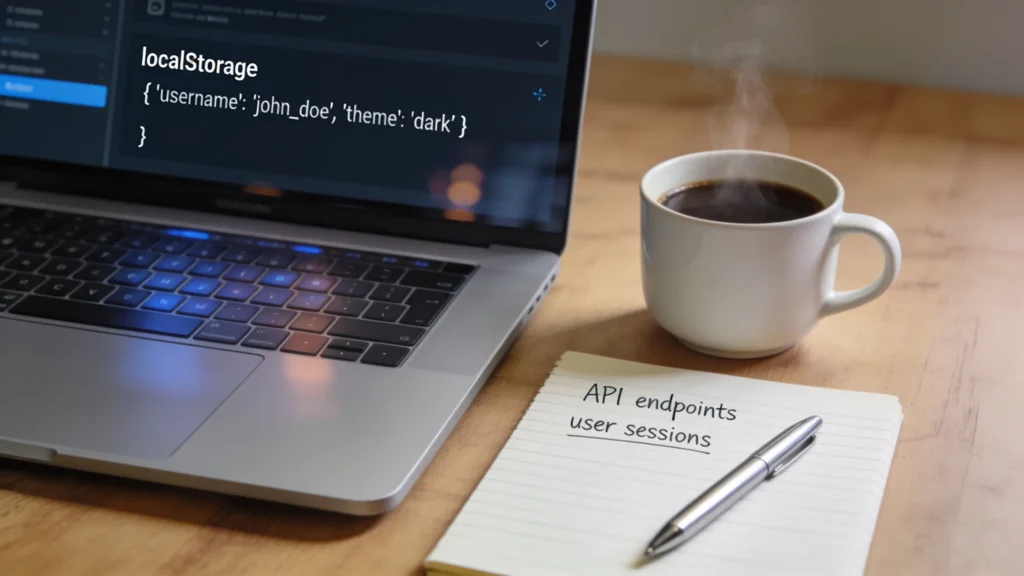
// Example snippet to clear localStorage and reload the page
localStorage.clear();
location.reload();
Mastering the console transforms it from a simple output device into a versatile development environment that accelerates debugging, testing, and learning. It’s the closest thing to a live REPL for JavaScript in the browser, providing immediate insight into the behavior of your code and the environment it runs in.