There’s a chasm between knowing JavaScript syntax and being a JavaScript developer. You can know what a `for` loop is, what `.map()` does, and how to declare a function. But when a problem hits your desk that isn’t a perfect tutorial-shaped box, you freeze. You stare at the screen, and your mind goes blank. We’ve all been there. You end up on Stack Overflow, copy-pasting a chunk of code you only half-understand, hoping it works. It’s a frustrating place to be.
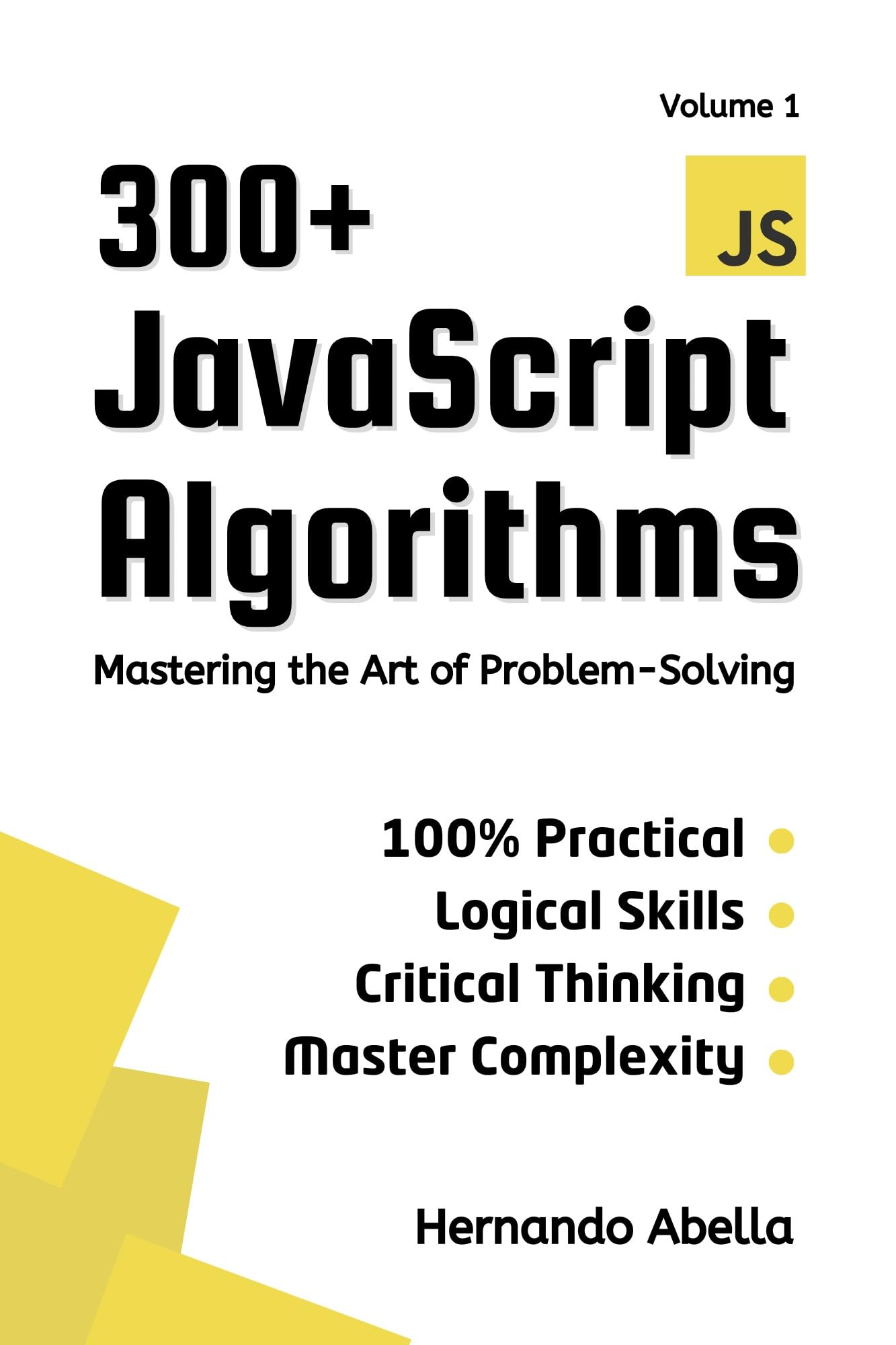
Here’s the thing: Problem-solving isn’t magic. It is a muscle. And like any muscle, you build it with repetition, with focused exercise. You don’t get strong by reading a book about anatomy; you get strong by lifting weights. The book seems to be built entirely around that philosophy.
It’s Not About Memorizing Answers
The entire pitch here is about getting your hands dirty. It’s not a theoretical computer science textbook filled with abstract proofs. It’s a digital workbook, a sparring partner. The concept of having 300+ challenges is key. That’s the kind of volume you need to start seeing the underlying patterns. The first time you solve a specific array manipulation, it’s a struggle. The tenth time, you recognize the pattern instantly. The twentieth time, you’re not even thinking about it; you’re just doing it, and your mind is free to focus on the higher-level logic of your application.
Building Your Mental Toolbox
A good developer doesn’t have every algorithm memorized. What they have is a toolbox of techniques. They know when to reach for recursion, when an iterative approach is better, and when a hash map can turn an impossibly slow task into something that runs in a blink. The book looks like it’s designed to fill that toolbox, one practical problem at a time. It’s not just about sorting and searching; it’s about breaking down messy, real-world logic into clean, solvable steps.
The focus on clean, readable, and maintainable code is the real kicker. It’s one thing to get the right answer. It’s another thing entirely to write a solution that your future self—or your teammate—can actually understand and modify without wanting to tear their hair out. That’s the difference between a hobbyist and a professional.
So, Who Is This Really For?
Based on the description, this book seems laser-focused on a few key people. See if you fit the bill:
- You’ve just finished a “Learn JavaScript” course, you know the basics, but you feel lost when trying to build something from scratch. You need to bridge the gap between syntax and application.
- You are a self-taught developer who feels like you have gaps in your foundational knowledge. You want to solidify your understanding of the “how” and “why,” not just the “what.”
- You’re prepping for coding interviews. Let’s be honest, interviews are a performance. That is your training ground to practice the kinds of challenges that get thrown at you.
- You’re coming to JavaScript from another language like Python or Java. You understand programming logic, but you need to discover the idiomatic JavaScript way of solving problems.
This isn’t for the senior architect designing massive distributed systems. That’s for the person on the ground, the one writing the code, who wants to level up from “I can make it work” to “I can make it work right, and I understand why.” It’s about building the confidence to tackle any problem, not just the ones you’ve seen before. If you are serious about moving past the beginner plateau, this looks like the set of weights you need to start lifting.