To get started with creating a basic Node.js server capable of handling POST requests, you first need to set up your environment. Make sure you have Node.js installed on your machine. Once this is done, you can create a new directory for your project and initialize it with npm.
mkdir my-node-server
cd my-node-server
npm init -y
Next, install Express, which is a minimal and flexible Node.js web application framework that provides a robust set of features for building web and mobile applications.
npm install express
Now, let’s create a simple server. You can create a file called server.js where you will define your server and configure it to handle POST requests.
const express = require('express');
const app = express();
const port = 3000;

app.use(express.json()); // Middleware to parse JSON bodies

app.post('/data', (req, res) => {
  console.log(req.body); // Log the incoming data
  res.send('Data received');
});

app.listen(port, () => {
  console.log(Server running at http://localhost:${port});
});
In this code, we set up an Express application, specify a port, and create a POST route at /data. The server listens for incoming requests on port 3000. When a POST request is made to /data, it logs the request body to the console and sends a simple response back to the client.
To test this setup, you can use a tool like Postman or cURL. Here’s how you can send a POST request with cURL:
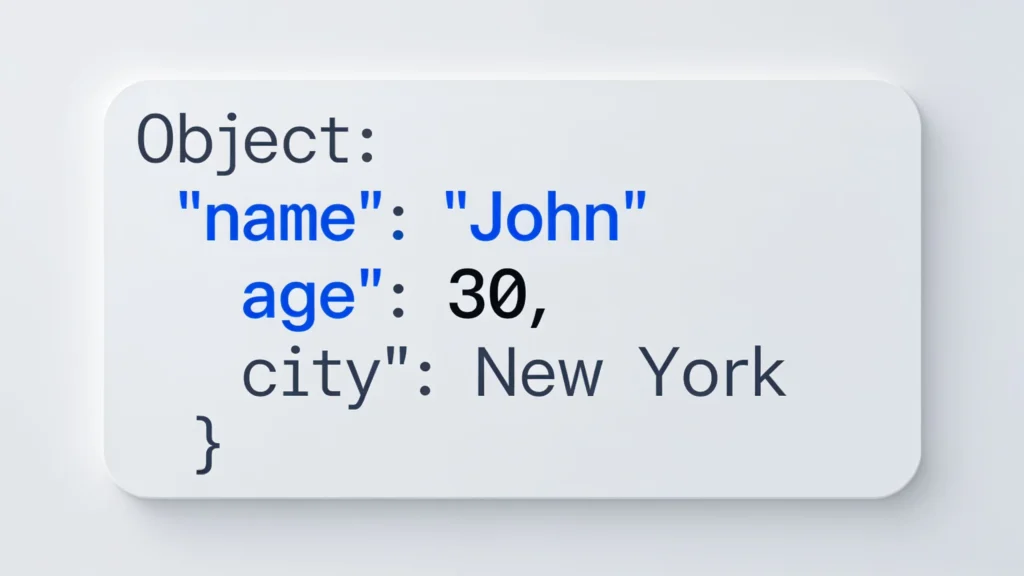
curl -X POST http://localhost:3000/data -H "Content-Type: application/json" -d '{"name": "John", "age": 30}'
This command sends a JSON object with a name and age to your server. The server should log this data and respond with “Data received”. If everything is set up correctly, you’ll see the logged output in your terminal.
As you build more complex applications, handling various types of requests and ensuring data integrity becomes crucial. The next step involves understanding the request and response objects in Express.js, which will give you more control over how you manage incoming data and send responses back.

WHOOP 5.0/MG Activity Tracker - 12 Month Membership - Health and Fitness Wearable – 24/7 Activity and Sleep Tracker, Personalized Coaching, Menstrual Cycle Insights – 14+ Days Battery Life
$239.00 (as of July 20, 2026 03:55 GMT +00:00 - More infoProduct prices and availability are accurate as of the date/time indicated and are subject to change. Any price and availability information displayed on [relevant Amazon Site(s), as applicable] at the time of purchase will apply to the purchase of this product.)Understanding the request and response objects in Express.js
At the core of every Express route handler are two fundamental objects: req (the request object) and res (the response object). The req object encapsulates all the information about the HTTP request that the client sent, while the res object is used to craft and send the HTTP response back to the client.
The req object contains properties like req.params, req.query, and req.body, each serving a distinct purpose. For instance, req.params holds route parameters defined in the URL, req.query contains the URL query string parameters, and req.body contains the parsed body of the request, which is particularly useful for POST and PUT requests.
Let’s illustrate this with a simple example that extracts data from all these sources:
app.post('/user/:userId', (req, res) => {
  const userId = req.params.userId;         // URL parameter
  const filter = req.query.filter || 'all'; // Query string parameter
  const data = req.body;                    // Request body

  console.log('User ID:', userId);
  console.log('Filter:', filter);
  console.log('Data:', data);

  res.json({
    message: 'Request data received',
    userId,
    filter,
    data
  });
});
In this snippet, if you send a POST request to /user/123?filter=active with a JSON body, Express will parse these components and make them available through req.params, req.query, and req.body. This separation allows you to handle different parts of the incoming request cleanly and logically.
On the response side, the res object offers a robust API to control what is sent back to the client. You can set status codes with res.status(), send JSON with res.json(), plain text with res.send(), or even stream files with res.sendFile(). Properly setting the status code very important for communicating the outcome of the request.
Here’s a practical example demonstrating various response methods:
app.post('/submit', (req, res) => {
  const { name, email } = req.body;

  if (!name || !email) {
    // Missing required fields - respond with 400 Bad Request
    return res.status(400).json({ error: 'Name and email are required.' });
  }

  // Process the data (e.g., save to database)

  // Respond with a 201 Created and a confirmation message
  res.status(201).json({ message: User ${name} registered successfully. });
});
Notice the use of return before res.status(400).json(...). This ensures the function exits immediately after sending the error response, preventing further code execution that might otherwise cause unexpected behavior.
Another important method is res.set(), which lets you customize HTTP headers. For example, you might want to specify caching directives or content types explicitly:
res.set('Cache-Control', 'no-store');
res.set('Content-Type', 'application/json');
res.status(200).json({ status: 'ok' });
Understanding when and how to use these methods gives you granular control over the HTTP lifecycle. The req and res objects are your gateway to managing client-server communication effectively.
Beyond the basics, the req object also provides access to headers through req.headers, cookies via middleware like cookie-parser, and even the raw request stream if you choose to handle data manually. Similarly, the res object supports chaining methods, which can lead to concise and readable code:
res.status(200)
   .set('X-Custom-Header', 'foobar')
   .json({ success: true });
Keeping these capabilities in mind will help you craft APIs that are not only functional but also adhere to HTTP standards and best practices. Next, we will explore how to validate incoming data and handle errors gracefully to build robust and secure applications.
Implementing data validation and error handling techniques
Data validation is an important aspect of building robust applications. It ensures that the incoming data meets specific criteria before processing it, thus preventing unwanted errors and vulnerabilities. In Express.js, you can implement data validation using various libraries, but one of the most popular choices is Joi.
First, install the Joi library in your project:
npm install joi
Now, let’s create a simple validation schema for user data. This schema will define the structure of the incoming data, including required fields and their types. Here’s how you can set it up:
const Joi = require('joi');

const userSchema = Joi.object({
  name: Joi.string().min(3).required(),
  email: Joi.string().email().required(),
  age: Joi.number().integer().min(0)
});
In this schema, we specify that the name must be a string with a minimum length of 3 characters, email must be a valid email format, and age is an optional integer that should not be negative. With this schema in place, we can validate incoming data in our route handler:
app.post('/register', (req, res) => {
  const { error } = userSchema.validate(req.body);

  if (error) {
    return res.status(400).json({ error: error.details[0].message });
  }

  // Proceed with processing the valid data
  res.status(201).json({ message: 'User registered successfully.' });
});
In this example, we validate the incoming request body against our userSchema. If the validation fails, we respond with a 400 Bad Request status and include the validation error message. If the data is valid, we can proceed with further processing, like saving the user to a database.
Another essential aspect of building APIs is error handling. It’s critical to provide meaningful feedback when something goes wrong. In Express, you can implement centralized error handling using middleware. Here’s how you can set up a basic error handler:
app.use((err, req, res, next) => {
  console.error(err.stack); // Log the error for debugging
  res.status(500).json({ error: 'Something went wrong!' });
});
This middleware will catch any errors that occur in your application. By placing it after all route definitions, it will handle any unhandled errors and return a 500 Internal Server Error status with a generic message. You can customize this further to provide more detailed error messages based on the error type.
For instance, if you want to handle validation errors specifically, you could modify the error handler like this:
app.use((err, req, res, next) => {
  if (err.isJoi) {
    return res.status(400).json({ error: err.details[0].message });
  }
  console.error(err.stack); // Log other types of errors
  res.status(500).json({ error: 'Something went wrong!' });
});
This modification checks if the error is a Joi validation error and responds with a specific message for that case. For all other errors, it falls back to the generic response.
Proper error handling and validation not only improve the user experience but also enhance the security and reliability of your application. By catching errors early and validating data rigorously, you can prevent many common pitfalls in web application development.