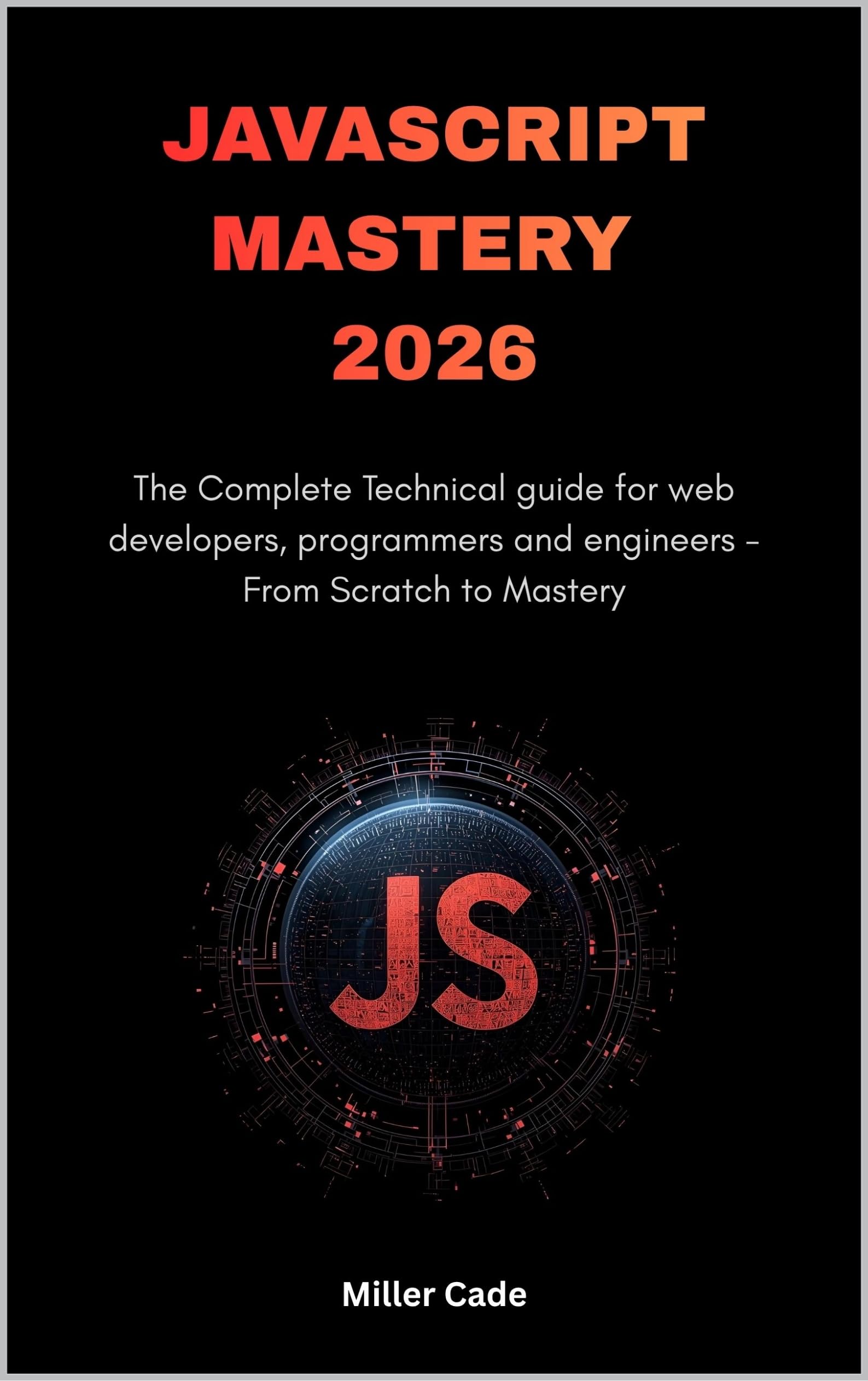
Let’s be clear. The number of so-called “JavaScript tutorials” out there is staggering. Most of them are a random collection of tips and tricks, a hodgepodge of snippets that leave you with a fragile understanding of a few popular frameworks. They don’t teach you the craft. They don’t teach you the discipline. They create technicians, not engineers.
So, when a book comes along with a title like JavaScript Mastery 2026, my first reaction is skepticism. “Mastery” is a strong word. It’s a destination you spend a career traveling toward, not a certificate you get from reading 400-odd pages. But then I read what the book claims to deliver. And my skepticism wanes, replaced by a cautious optimism. Why? Because it seems to understand what’s actually important.
This Isn’t About Learning Syntax. It is About Professionalism.
The promise here isn’t just about learning the latest ES2025 features, though that’s in there. The real promise, the one that matters, is the push toward becoming a professional. It’s about building a foundation so solid that new frameworks and fads don’t scare you; they become just another tool you can choose to pick up, or not.
For the Aspiring Developer
If you’re just starting, you’re standing at a fork in the road. One path leads to being a “framework specialist” who is lost the moment the ecosystem shifts. The other path leads to being a Software Engineer who happens to use JavaScript. The book seems to point you down the second path. It forces you to confront the fundamentals: closures, the event loop, async programming. This is the bedrock. Don’t skip it. If you build your house on this rock, it will stand. If you build it on the sand of the latest framework tutorial, you’ll be rebuilding it every two years.
For the “Experienced” Developer
You’ve been working for a few years. You know your way around React or Vue. You can build things. But let me ask you: Do you really understand the environment your code runs in? Do you know the difference in how Node.js, Deno, and Bun execute your code? Could you write a complex application with no framework at all if you had to? If the answer is no, then you are not experienced; you are merely practiced in a narrow specialty. A professional knows their tools, and the language is only one tool. The runtime, the package manager, the version control system—these are all part of your craft. This book appears to be a good, structured way to fill in those dangerous gaps in your knowledge.
The description highlights several things that I consider non-negotiable for any serious developer:
- The Ecosystem is Not Optional: Code does not run in a vacuum. Understanding the browser, the server, and the new runtimes is part of the job. Neglecting this is malpractice.
- Tools Define the Professional: It promises to teach Git, npm, and professional workflows. Good. You’re not a professional if you are not using source control properly. Period.
- Code That Fails is a Failure: A focus on error handling, debugging, and optimization is the difference between an amateur and an engineer. Anyone can write code that works on their machine. A professional writes code that is robust, resilient, and performant.
Look, no book will make you a master. Only years of deliberate practice, of reading and writing code—and of cleaning up the messes made by others and yourself—will do that. But a book can provide a map. It can instill discipline. The description of JavaScript Mastery 2026 suggests it’s not just another flimsy collection of trendy examples. It reads like a blueprint for building a career. If you’re serious about your craft, it’s a blueprint worth investigating.