There’s a point every developer hits when they are moving past the basics. You know JavaScript. You can manipulate the DOM. You’ve probably cobbled together something with event listeners and a bit of jQuery, and it worked. But then you look at the code a month later, and it’s a tangled mess. A state change in one corner of the app unpredictably breaks something in another. That is the wall. It’s the point where you realize that building for the web isn’t about just making things appear on a screen; it’s about managing complexity.
That’s where tools like React come in. But learning React, especially with TypeScript, can feel like you’re trying to drink from a firehose. The ecosystem is vast, the opinions are many, and a lot of tutorials show you how to build a to-do list but leave you stranded when it comes to building something… well, real. Something “production-ready.”
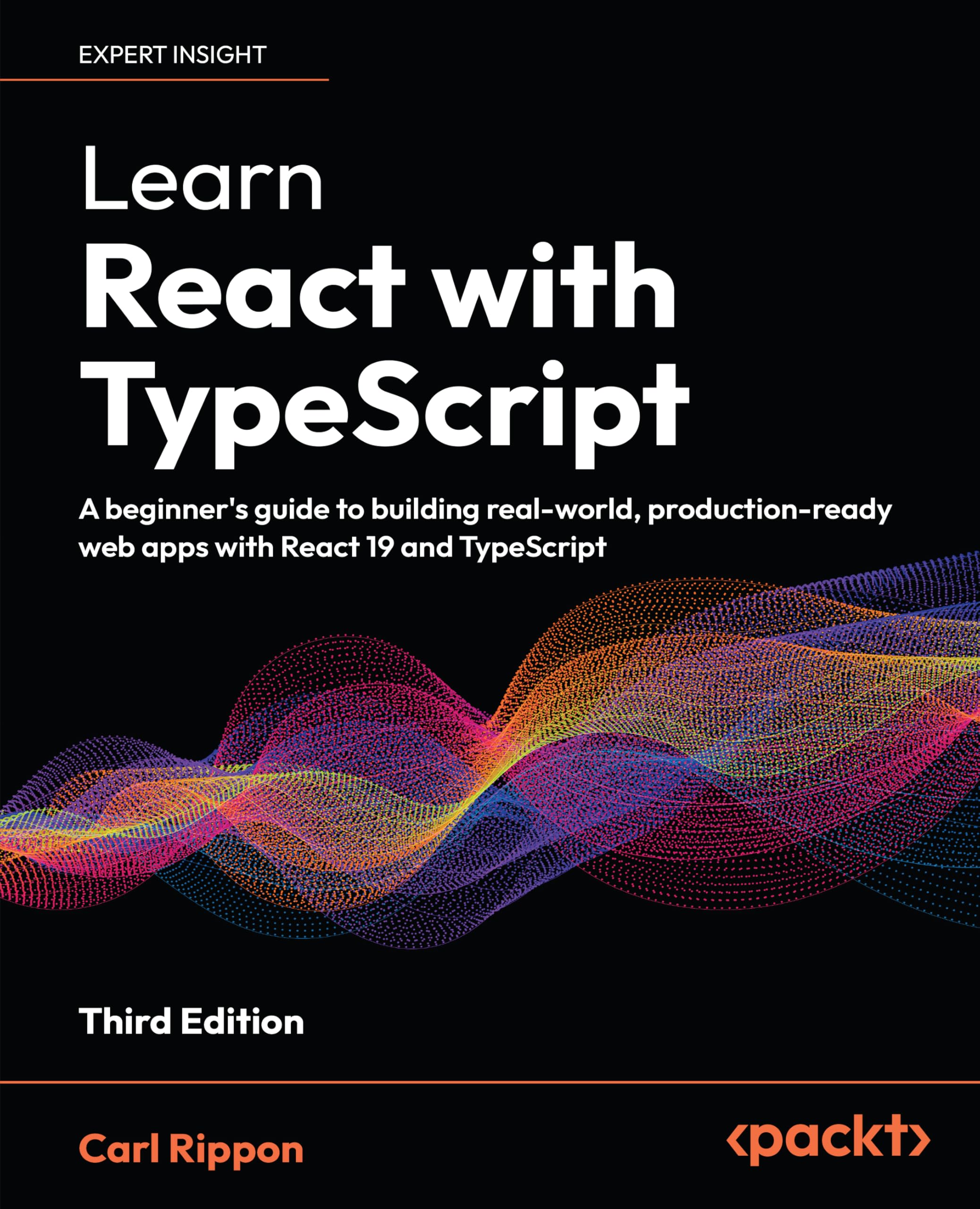
Looking at the description for this book, my first thought isn’t about the syntax it’ll teach you. It is about the mental model it promises to build. The real value proposition here isn’t just learning a framework; it’s about shifting your entire mental model from imperative (“do this, then do that”) to declarative (“this is the state I want the UI to be in”). Adding TypeScript to the mix from day one forces a level of discipline that pays massive dividends later. It’s not just about catching typos; it’s a design tool. It forces you to think clearly about your data structures and the contracts between your components before you write a single line of logic.
So, who is this book really for?
The title says “beginner’s guide,” but that term is relative. This isn’t for a “what is a variable?” beginner. This is for a specific kind of developer, and if you fit the profile, this could be the exact accelerator you need.
The book is likely a home run for you if:
- You’re comfortable with modern JavaScript (ES6+). You understand concepts like let/const, arrow functions, destructuring, and modules. You don’t need a refresher on the fundamentals of the language.
- You’ve built something with vanilla JavaScript and felt the pain. You understand why frameworks like React exist because you’ve experienced the alternative. Your code has become “spaghetti” and you’re actively looking for a structured solution.
- You are a backend developer (maybe with Python, Java, or C#) who needs to get up to speed on the modern frontend. You understand programming logic and types, but the whole JavaScript build-tool-and-framework ecosystem feels like a chaotic black box.
- You’re willing to learn two things concurrently. Embracing TypeScript alongside React from the start is the correct, modern approach, but it has a steeper initial learning curve. This book is for those who would rather learn it right than learn it fast.
You might want to hold off if:
- You’re brand new to programming or JavaScript itself. Get a solid footing there first. Master the language before you try to master a framework built on top of it. Fighting with JavaScript syntax while also fighting with React concepts is a recipe for frustration.
- You’re an experienced React developer. That is a beginner’s guide. While the focus on React 19 is a definite plus (it means you won’t be learning soon-to-be-outdated patterns), a seasoned dev would likely be better served by diving directly into the official docs and specific articles on the new compiler and features.
The emphasis on “real-world, production-ready” and the inclusion of React 19 suggests this isn’t just another book of toy examples. It’s aiming to teach you the patterns and practices that let you build something robust. The fact that it’s a third edition is also a good sign; it implies the material has been tested, refined, and updated based on feedback and the evolution of the web. It is not just a quick cash-in on a popular technology. It is an investment in a specific path—one that leads to building stable, scalable, and maintainable web applications.