Vue 3 introduces a reactivity system this is both powerful and intuitive. At its core, this system revolves around the idea of reactive primitives, such as ref and reactive, which allow developers to create stateful components with minimal boilerplate.
The ref function is used to create a reactive reference to a single value. That’s particularly useful when dealing with primitive data types like strings, numbers, or booleans. Here’s a simple example:
import { ref } from 'vue';

const count = ref(0);

function increment() {
  count.value++;
  console.log(count.value);
}
In this snippet, we define a reactive variable count initialized to 0. The value property is essential here, as it allows us to access and modify the reactive state.
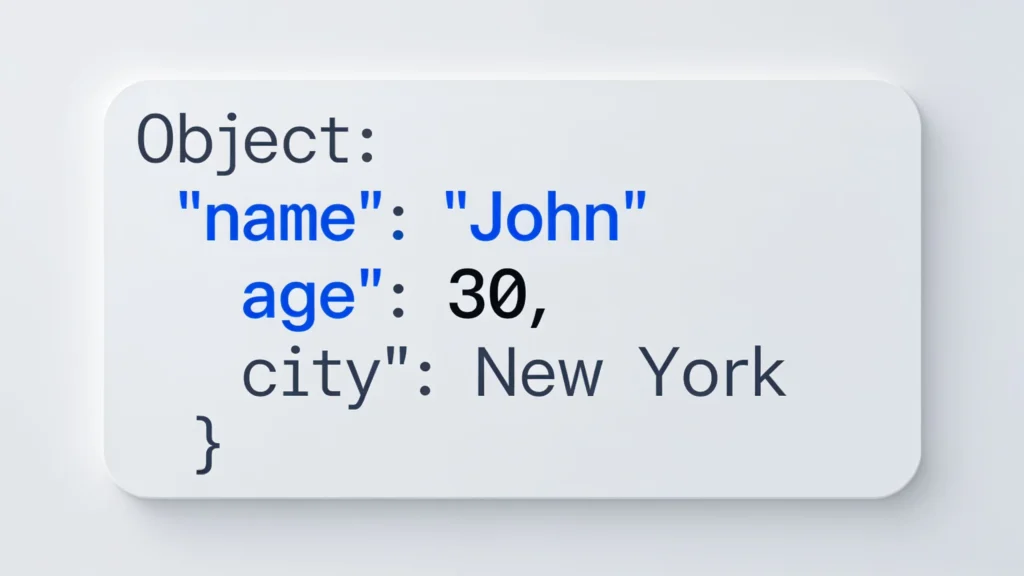
On the other hand, reactive is used for creating a reactive object. That’s ideal for handling complex data structures that involve multiple properties. Consider the following example:
import { reactive } from 'vue';

const state = reactive({
  user: {
    name: 'Luke Douglas',
    age: 30
  }
});

function updateName(newName) {
  state.user.name = newName;
  console.log(state.user.name);
}
By using reactive, we can wrap an entire object and keep track of its properties. This allows us to directly manipulate nested properties without needing to access them through a value accessor.
One of the key strengths of Vue’s reactivity system is its ability to automatically track dependencies. When a reactive property changes, Vue efficiently updates only the components that rely on that specific property. That is accomplished through a process known as dependency tracking. When a component renders, it registers which reactive properties it uses, and Vue monitors these properties for changes.
This means that when the state updates, the framework knows precisely which components to re-render, resulting in optimal performance. The reactivity system is also compatible with JavaScript’s native types, ensuring seamless integration with existing codebases.
Understanding the underlying mechanics of Vue’s reactivity allows developers to write more efficient and maintainable code. For instance, using computed properties can enhance performance by caching results based on reactive dependencies. Here’s how you can define a computed property:
import { computed } from 'vue';

const total = computed(() => {
  return state.user.age + 10; // Just an arbitrary calculation
});
In this case, total will automatically recalculate whenever state.user.age changes, providing a clean and efficient way to derive state. This is just a glimpse into how Vue 3’s reactivity can simplify state management in your applications. As you delve deeper, you’ll find that mastering these concepts will significantly enhance your development capabilities, enabling you to create dynamic user interfaces with ease.

Portable Bluetooth Speaker Beach Essentials: IPX5 Waterproof for Outdoor/Powerful HD Sound/Dynamic Light/All Day Playtime/Wireless BT 5.3/TWS Pairing, Travel|Camping|Pool Accessorie, School Supplies
$19.97 (as of July 20, 2026 03:55 GMT +00:00 - More infoProduct prices and availability are accurate as of the date/time indicated and are subject to change. Any price and availability information displayed on [relevant Amazon Site(s), as applicable] at the time of purchase will apply to the purchase of this product.)practical examples for managing reactive state
Sometimes you need to watch specific reactive values for changes and perform side effects accordingly. That’s where the watch API shines. It allows you to react explicitly to changes in state without tying logic directly into computed or render functions.
import { ref, watch } from 'vue';

const searchTerm = ref('');

watch(searchTerm, (newValue, oldValue) => {
  console.log(Search term changed from ${oldValue} to ${newValue});
  // Trigger data fetching or filtering here
});
Here, watch listens to changes on searchTerm. Unlike computed properties, watchers let you run arbitrary code when a reactive source updates, making them ideal for asynchronous operations or expensive side effects.
For reactive objects with multiple properties, you can watch individual keys or the entire object. However, to deeply watch nested changes, you must specify the deep option explicitly:
import { reactive, watch } from 'vue';

const profile = reactive({
  name: 'Alice',
  preferences: {
    theme: 'dark',
    notifications: true
  }
});

watch(profile, (newVal, oldVal) => {
  console.log('Profile changed:', newVal);
}, { deep: true });
Without { deep: true }, changes to nested properties like profile.preferences.theme wouldn’t trigger the watcher. This explicit signaling is a small but crucial detail: Vue tracks all top-level properties reactively, but needs help to observe nested mutations deeply.
State management often requires more complex structures. Vue 3’s reactivity allows you to compose reactive objects from smaller reactive pieces, retaining granular reactivity throughout.
import { reactive, ref } from 'vue';

const userInfo = reactive({
  id: 1,
  name: 'Bob',
  settings: ref({
    darkMode: false,
    language: 'en'
  })
});

userInfo.settings.value.darkMode = true;
console.log(userInfo.settings.value.darkMode); // true
Notice how you can mix reactive and ref types. The settings property is a ref containing an object. This allows you to replace the entire settings object reactively while still tracking internal mutations.
Sometimes you want to extract and return reactive properties directly from functions. Vue’s toRefs helper can unpack a reactive object’s properties into standalone refs, preserving reactivity and enabling flexible usage:
import { reactive, toRefs } from 'vue';

function useCounter() {
  const state = reactive({ count: 0 });

  function increment() {
    state.count++;
  }

  return {
    ...toRefs(state),
    increment
  };
}

const { count, increment } = useCounter();
increment();
console.log(count.value); // 1
This pattern is particularly useful in composables where you want to expose reactive state cleanly while maintaining reactivity.
To further illustrate, here is a full example combining multiple concepts – reactive objects, watchers, and computed properties:
import { reactive, computed, watch } from 'vue';

const form = reactive({
  firstName: '',
  lastName: ''
});

const fullName = computed(() => ${form.firstName} ${form.lastName});

watch(fullName, (newFullName) => {
  console.log('Full name updated:', newFullName);
});

// Updating state
form.firstName = 'Eric';
form.lastName = 'Raymond';
// Console logs: Full name updated: Eric Raymond
By composing these tools, you can build rich, responsive state models that remain easy to reason about while tightly integrating with Vue’s rendering system.