There’s a strange and wonderful moment when you’re learning to program. It’s the point where a jumble of abstract syntax—`var`, `function`, `if/else`—suddenly clicks into a coherent mental model. You stop just typing and start seeing the logic flow, the data moving, the state changing. It’s the leap from rote memorization to genuine understanding. The hardest part of that journey is often the very first step: getting from a state of zero knowledge to that initial, fragile mental model.
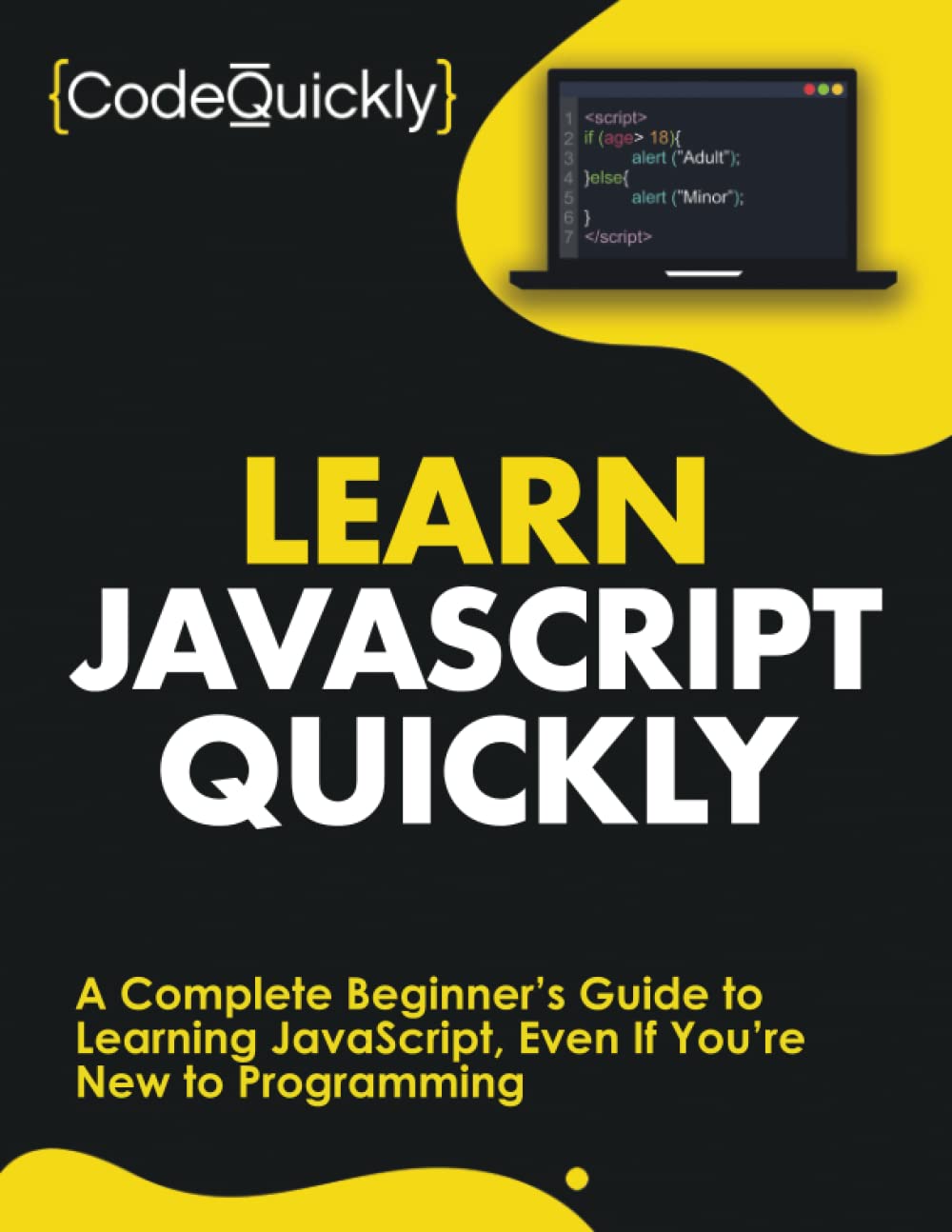
This is the peculiar space where a book like Learn JavaScript Quickly lives. The title has “Quickly” in it, which should always set off a programmer’s skepticism. True mastery is never quick. But that is not what this book is selling. At a scant 174 pages, it can’t possibly be a “complete” guide in the way a 900-page reference tome is. And that’s its greatest strength.
Bootstrapping Your JavaScript Brain
Think of the book as a bootstrap loader for learning JavaScript. Its job isn’t to teach you everything. Its job is to get you from a “cold start”—staring at a blank editor with no idea what to type—to a “warm start” where you have just enough foundational knowledge to begin experimenting and learning on your own. It prioritizes momentum over encyclopedic detail. It’s designed to get you a quick win, to get you over that initial hump of inert frustration where so many aspiring programmers give up.
So, who is this for?
That is a tool for a very specific job. You’ll get the most value if you are:
- A true beginner. I mean someone who finds the concept of programming intimidating and doesn’t know a variable from a function. This book holds your hand through that initial, often terrifying, phase.
- Someone who has bounced off thicker books. If you’ve tried to tackle a massive “definitive guide” and got lost in chapter two, this book’s brevity is a feature, not a bug.
- A “code-adjacent” professional. Maybe you are a designer, a project manager, or a marketer who needs to understand the basic grammar of the web to work better with developers. This will give you that conversational fluency.
The Project is The Point
The real value here isn’t in the chapters explaining what a loop is. You can get that anywhere. The value is in the “Hands-On Project”. That is where the rubber meets the road. It’s the part where this book forces you to stop passively reading and start actively building. The first part of this book gives you the raw components—the LEGO bricks, if you will. The project is the instruction manual that makes you assemble them. It’s in that assembly process, when you inevitably type something wrong and have to debug it, that the real learning solidifies. Do not skip the project. The project is the book’s core lesson.
Conversely, the book is absolutely not for you if:
- You already know another programming language. You’ll be bored to tears. You need a book that maps concepts you already know (like loops and conditionals) to JavaScript syntax, not one that explains them from first principles.
- You’re looking for a deep dive. This book will not teach you about the event loop, prototypal inheritance, closure mechanics, or how to optimize V8. It barely scratches the surface.
- You need a reference manual. That is a book you read once to get going. It’s not something you’ll keep on your desk to look up APIs.
The goal of a book like this isn’t to make you an expert. It’s to reduce the activation energy required to start your journey. It gives you a working model, however simple, that you can then build upon, refine, and even break. It takes you from “I can’t” to “I can, a little bit”. And for a programmer, that tiny foothold is everything. It’s the starting point for a career of exploration, of peering under the hood, and of building ever more complex and wonderful things. The book is the first push of the flywheel.