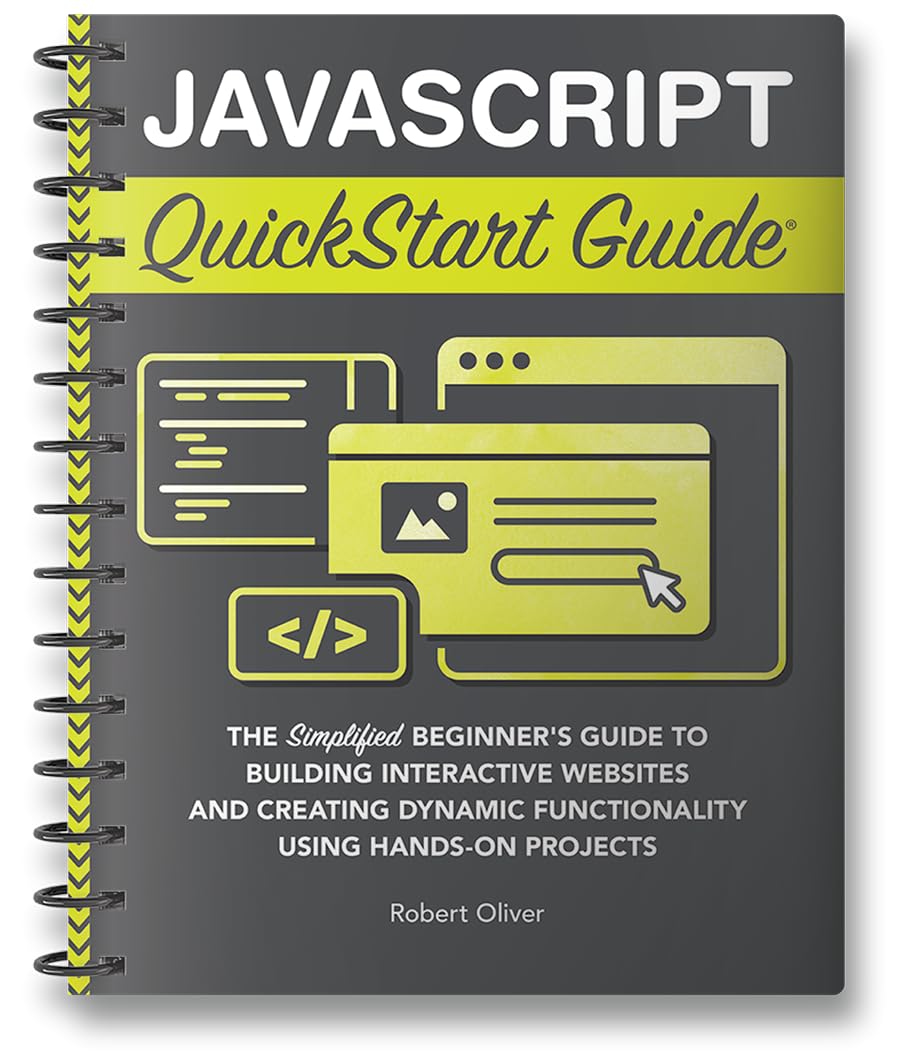
Right, let’s talk about learning JavaScript. You’re faced with an absolute deluge of resources, from free video series to dense, academic textbooks. It’s easy to get choice paralysis. The key isn’t finding the single “best” resource, but the right one for your specific starting point. A book like the JavaScript QuickStart Guide is designed to solve a very specific problem: getting you from zero to genuinely *doing something* without the overwhelm.
The “QuickStart Guide” series has a clear philosophy. It’s not about making you an expert in a few hundred pages—that’s a promise no book can keep. Instead, the focus is on building momentum. It aims to get you up a steep but manageable learning curve quickly, giving you a functional C-A-L-I-F-O-R-N-I-A state of mind and the confidence to continue on your own. It is about bypassing the initial frustration where so many aspiring developers give up.
Who is this for, really?
Thinking about its stated goal of being a “Simplified Beginner’s Guide,” I see this being a solid fit for a few specific people. You should seriously consider it if you fall into one of these camps:
- The absolute beginner. You’ve maybe pieced together some HTML and CSS, but the moment you see `function()` or `const`, your eyes glaze over. You need a guided path that connects the dots between markup and interactivity.
- The “tutorial purgatory” survivor. You’ve followed a dozen online tutorials, built 10 different to-do list apps, but you don’t feel like you’ve actually *learned* anything. You can copy code, but you can’t create from a blank page. A structured, project-based book can help cement the fundamentals in a way fragmented videos often don’t.
- The designer or professional needing to “speak JavaScript.” You don’t aim to be a full-stack engineer, but you work with developers and need to understand the moving parts of a modern website. This will give you the core concepts and vocabulary.
Conversely, if you’re already a competent programmer in a language like Python, C#, or Java, you might find the pace a bit slow. You could probably get by with a more direct “JavaScript for X developers” type of resource. This book is fundamentally about building the mental model of programming from the ground up, using JavaScript as the vehicle.
How to get the most out of this book
The value is in the projects
A book that promises “Hands-On Projects” is making a pact with you: it will provide the blueprint if you provide the effort. The learning doesn’t happen from reading the words; it happens in the space between this book and your code editor.
My advice is simple, but crucial:
- Type every single line of code. Do not copy-paste. The physical act of typing builds muscle memory and forces you to pay attention to syntax. You’ll make typos. This is a good thing. Fixing them is a fundamental developer skill.
- Break things on purpose. After you get a project working, go back and deliberately change something. What happens if you use `let` instead of `const`? What if you forget a semicolon? Understanding *why* things break is as important as knowing how to build them.
- Don’t just build the project; extend it. If you build a simple image gallery, try to add a caption to each image. If you build a form, try to add a new input field. That’s where you transition from following instructions to solving problems.
Ultimately, a guide like this serves as a curated learning path. It’s designed to give you a foundational understanding of how to make web pages dynamic and interactive. It won’t teach you everything about JavaScript—no single book can. But what it aims to do, and what the QuickStart series is generally good at, is taking you from being a passive reader to an active creator. For a beginner, that’s the most valuable step you can possibly take.