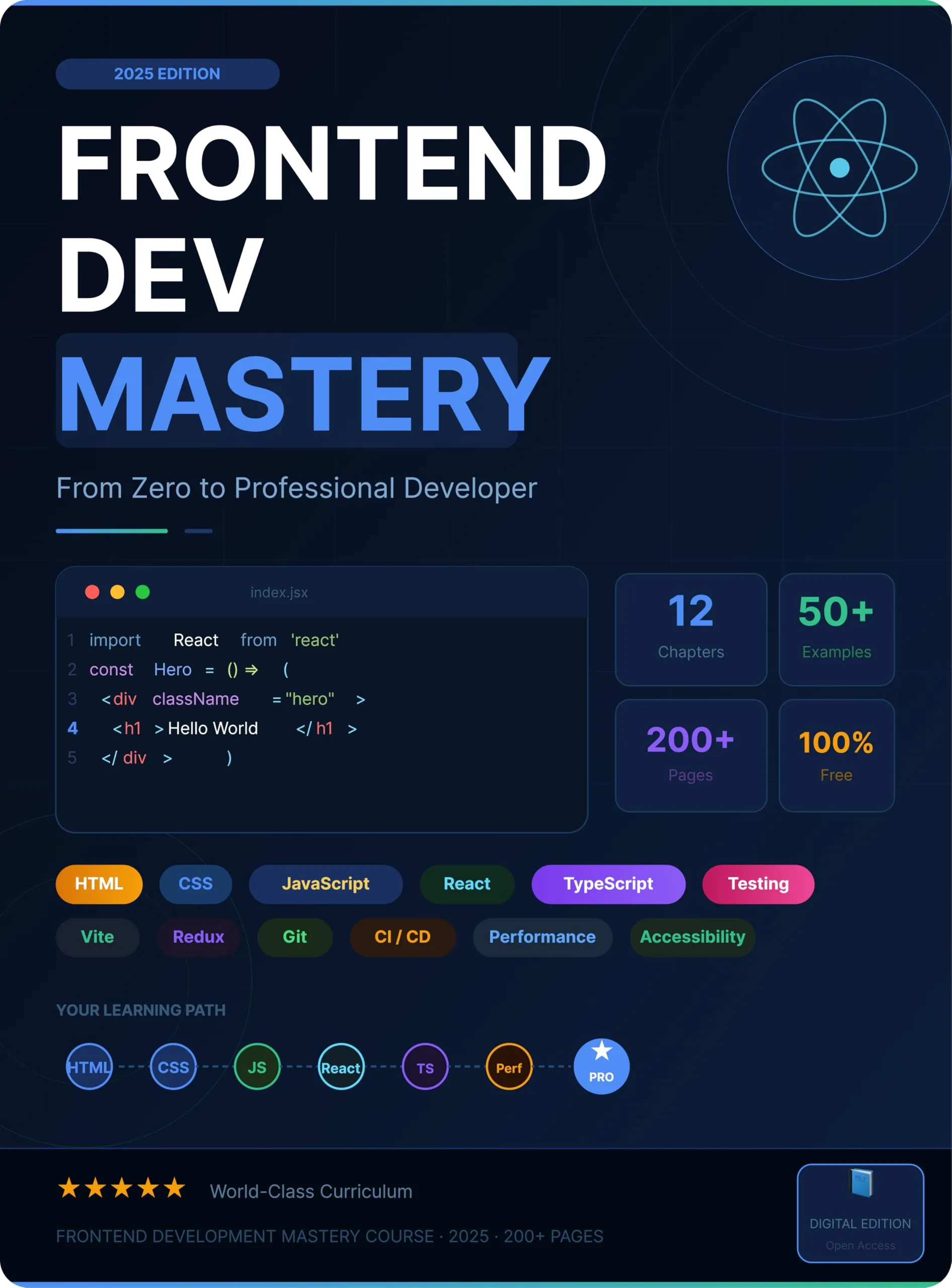
There’s a fundamental and often painful difference between knowing what to type and understanding why you’re typing it. We’ve all been there, hammering out code from a tutorial, watching the magic happen on screen, but with a nagging feeling that if one thing went wrong, we wouldn’t have the first clue how to debug it. You know the syntax, but you don’t have the mental model. It’s the gap between being a coder and being an engineer.
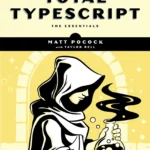
The book seems purpose-built to bridge that exact gap. The author’s entire premise isn’t to give you a fish, or even to teach you to fish—it’s to teach you the complete biology of the fish, the physics of the fishing rod, and the hydrology of the lake. It’s about building a deep, intuitive understanding from first principles. That’s the only way to truly master a craft, especially one that evolves as quickly as frontend development.
So, Who Is This Actually For?
The description positions it for a wide audience, and I think that’s accurate, but for different reasons. It really depends on what kind of pain you’re feeling right now.
If You are Just Starting Out…
You are standing at a fork in the road. One path is littered with quick-fix tutorials and “Learn X in 5 Minutes” videos. It’s the fast path to getting something on the screen, but it’s also the path to becoming a “cargo cult” developer—someone who copies patterns without grasping the underlying problems they solve. The book seems to be the other path. It starts you not with `
If You are Already in the Trenches…
Let’s say you have a year or two of experience. You know React. You can build components. But you get a little nervous when someone asks you to architect a new feature from scratch. You aren’t sure which state management tool to use and why. You hear terms like “event loop” or “tree shaking” and you nod along, but you couldn’t explain them under pressure. That is for you. That’s the resource that takes your practical, hard-won knowledge and bolts on the computer science and engineering theory you’re missing. It’s designed to be the catalyst that gets you from a mid-level “doer” to a senior-level “decider.”
What to Expect on the Journey
Based on the curriculum, this isn’t just a grab-bag of technologies. It is a structured ascent from the bare metal of the web to the highest levels of modern application architecture.
- A real foundation. We’re not talking about a quick refresher on HTML tags. We’re talking about the entire journey from a DNS request to a painted pixel on the screen. Understanding the render pipeline, the cascade, and the box model on this level is a superpower.
- Demystifying JavaScript. Let’s be honest, you can get pretty far in JavaScript without truly understanding closures, the prototype chain, or how `async/await` actually works with the event loop. The book promises to finally connect those dots, turning mysterious behaviors into predictable mechanics.
- Thinking in React, not just writing it. The goal here seems to be grasping why frameworks like React were even invented. Understanding the problems of state synchronization and UI rendering that led to JSX and hooks is far more valuable than just memorizing the hook APIs. The inclusion of the Next.js App Router and Server Components means you’re learning the absolute cutting edge of the ecosystem.
- The leap to engineering. That’s where the training wheels come off. The sections on TypeScript generics, testing strategies with Vitest and Playwright, and serious performance optimization (Core Web Vitals) are what separate a hobby project from a scalable, maintainable, professional product. That’s the stuff that gets you hired and promoted.
If you’re looking for a quick reference guide or a cheat sheet to get a project done by Friday, this probably isn’t it. That’s for the developer who wants to stop guessing and start knowing. It’s for the person who wants to build a career, not just a series of apps. It promises to equip you with the vocabulary and the mental frameworks to reason through problems you’ve never seen before—and in this field, that’s the only skill that truly matters.
Post navigation
Previous Post
 TypeScript for Beginners
Next Post