There comes a point in every programmer’s journey where the magic starts to break down. You know, that moment when the framework you’ve been using flawlessly suddenly produces an error so cryptic it might as well be written in another language. Or when your web app, which works perfectly on your machine, grinds to a halt on a user’s device, and you have no idea why. This is the moment you realize that knowing the incantations—the syntax, the API calls—is not the same as understanding the spell. You’ve hit the wall between using a tool and mastering it.
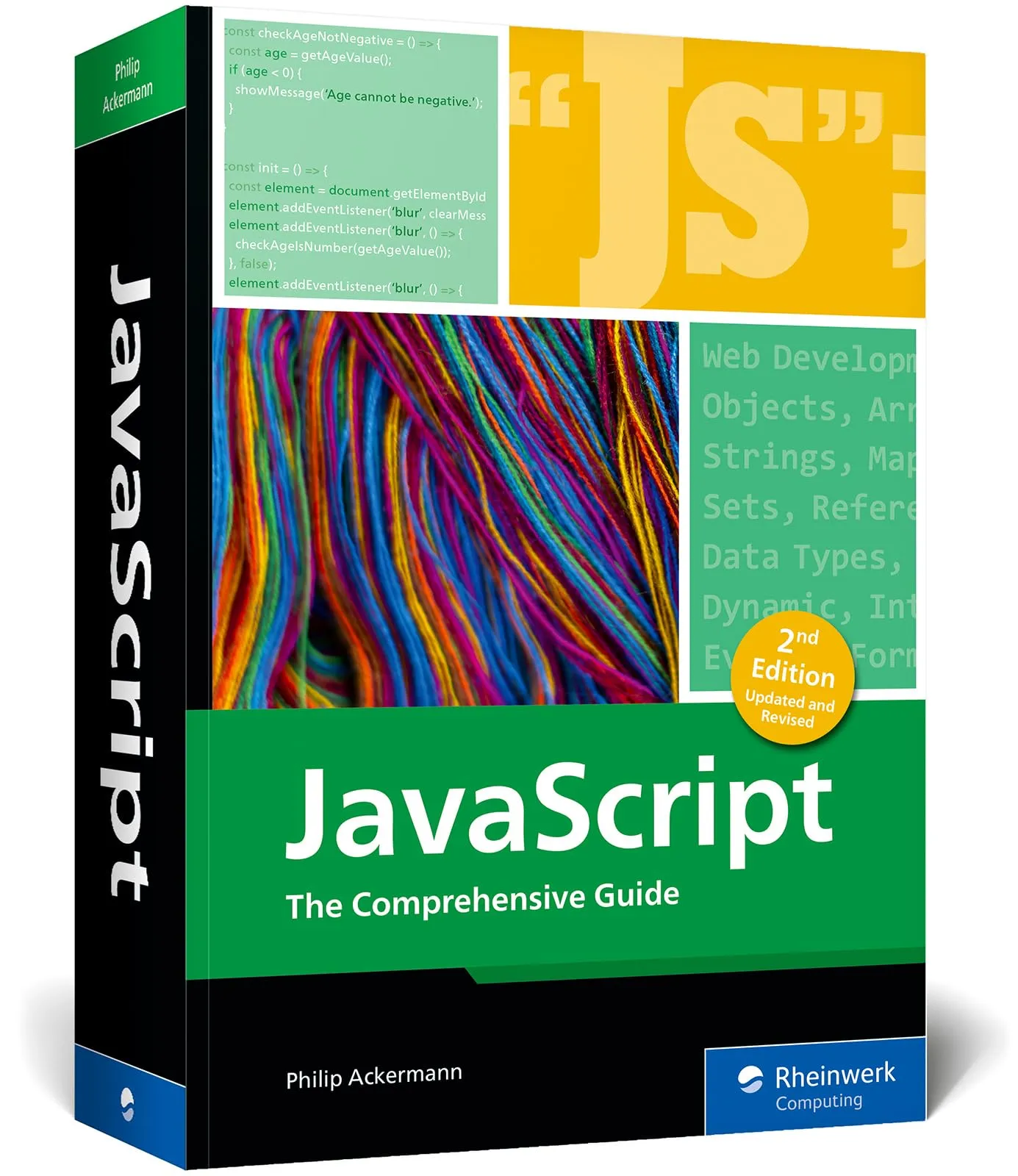
When you see a book titled JavaScript: The Comprehensive Guide to Learning Professional JavaScript Programming and note that it clocks in at nearly a thousand pages, you know it’s not for the faint of heart. This isn’t a weekend tutorial. It’s a map to the territory that lies beyond the wall. The description suggests this is a ground-up exploration aimed at building a deep, robust mental model of how JavaScript actually works, from the core language features to the asynchronous world of the browser and Node.js. It’s a serious book for those who are serious about their craft.
So, Who Needs a 990-Page JavaScript Book?
A book of this magnitude isn’t for everyone. It is a specialized tool. In my experience, the people who get the most out of this sort of deep dive are usually in one of a few camps.
You are a Bootcamp Grad Who Wants to Level Up
You’ve learned React, you can build a full-stack app, and you can talk about state management. But you feel a little shaky when the conversation turns to the event loop, prototypal inheritance, or memory management. You know what works, but you don’t really know why. A book like that’s your next step. It’s the computer science degree you didn’t get, focused laser-tight on the one language you use every day. Working through this won’t just make you a better JavaScript programmer; it will make you a better programmer, period.
You are a Seasoned C++ or Java Dev Who Landed in a JS World
You come from a world of strong typing, classical inheritance, and manual memory management. To you, JavaScript might feel like a weird, toy language where everything is an object and nothing makes sense. You keep looking for the “main” function and getting tripped up by the `this` keyword. The book is your Rosetta Stone. It will bridge the gap between the structured world you know and the dynamic, event-driven reality of JavaScript. It treats the language with the seriousness it deserves and will help you appreciate its power and navigate its quirks.
You’re Simply Curious About How Things Really Work
Maybe you’re just driven by that insatiable need to peel back the layers of abstraction. You are the kind of person who isn’t satisfied until you understand a system down to its fundamentals. If you want to go beyond just using JavaScript and truly understand the machine you are programming—even a virtual one like the V8 engine—then this is the kind of journey for you. It’s about building an intuition for performance, for debugging, and for writing code this is not just correct, but resilient and efficient.
Who Should Probably Wait?
On the other hand, this book is likely the wrong tool for a couple of scenarios:
- You’re an absolute, total beginner. If you’ve never written a line of code before, jumping into a 990-page comprehensive guide is like learning to swim by being dropped in the middle of the ocean. Start with a smaller, more focused introductory resource. Get your feet wet, build a few things, and then come back to this when you’re ready for the deep dive.
- You just need to get something done, fast. If your goal is to add a bit of jQuery to a legacy site or quickly hack together a prototype, that is overkill. The book is an investment in your long-term knowledge, not a shortcut to a short-term solution.
A book like this isn’t meant to be read like a novel. Don’t try to go cover-to-cover in a week. Treat it like a college course you’re taking on your own time. Read a chapter, then go and apply what you learned. Write code. Experiment. Break things and then use your new knowledge to fix them. Keep it on your desk as a reference for when you encounter one of those strange bugs. The goal isn’t to memorize 990 pages; it’s to internalize the core principles which will allow you to solve problems you haven’t seen yet.