The perpetual challenge for developers isn’t just learning a new concept; it’s achieving a level of fluency where that knowledge is instantly accessible under pressure—like in a technical interview or during a critical debugging session. We often mistake passive consumption of tutorials for genuine understanding. A tool that forces active recall and structured practice can be a significant lever for professional growth.
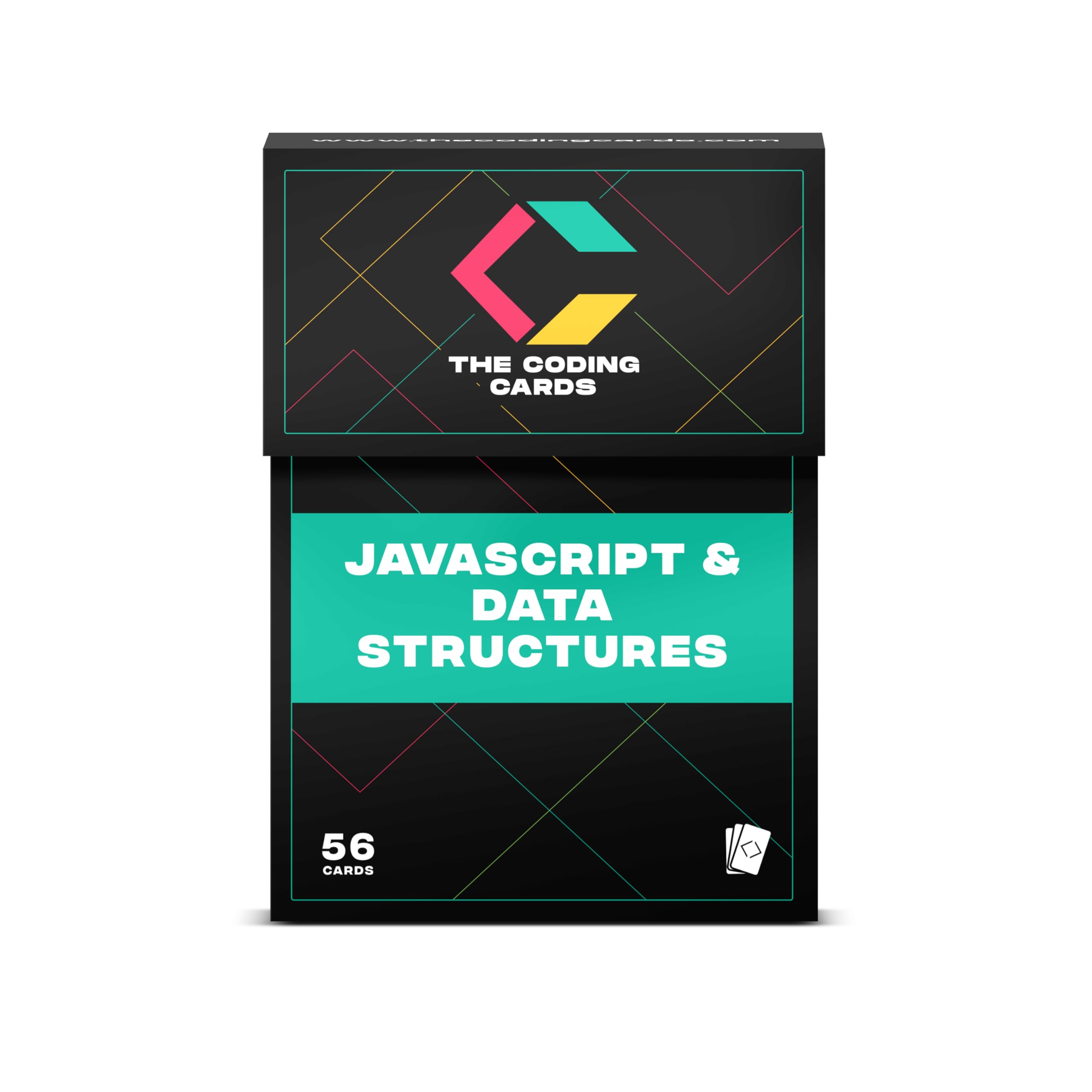
This set of flashcards appears to be engineered specifically to address that gap. It’s not a book you read cover-to-cover, but a system for deliberately practicing the foundational pillars of JavaScript and common data structures. The format itself encourages a different, more effective mode of learning than simply reading articles or watching videos.
Who Should Consider This Learning Tool?
Based on the description, the utility of these cards isn’t uniform across all developers. Their value is highest for specific groups with distinct goals. I see three primary audiences who would get a strong return on their investment of time and effort:
- The Aspiring JavaScript Developer. If you’re a bootcamp graduate or are self-taught, you likely have a collection of partially-learned concepts. You’ve built things, but you might struggle to articulate precisely what a closure is or why you’d choose a hash map over an array in a specific scenario. These cards provide a systematic way to find and patch those knowledge gaps, cementing the fundamentals needed to be interview-ready and effective on the job.
- The CS Student Facing Interview Season. Formal computer science education is invaluable for theory, but it doesn’t always map directly to the kinds of questions asked in a latest innovation interview. This tool can act as a bridge, helping you translate your academic knowledge of algorithms and big-O notation into the practical, JavaScript-centric language that interviewers expect. It’s a focused way to prepare for the specific performance of a technical screen.
- The Seasoned Professional Transitioning to JavaScript. If you’re coming from a background in Java, Python, or C#, you don’t need to learn a for loop again. Your challenge is mastering the idiosyncrasies of JavaScript—the event loop, the prototype chain, the behavior of this, and asynchronous patterns. A targeted tool like this allows you to efficiently zero in on these language-specific concepts without wading through material you already know.
A Method for Effective Use
Simply buying a tool doesn’t produce results; using it correctly does. To get the most out of a system like this, you can’t just passively flip through the cards. The real value is in the struggle to recall the information before you turn the card over. That’s the core principle of active recall. Use them as prompts. Read the question, put the card down, and try to explain the concept out loud or write the code on a whiteboard or in a text editor. Only then should you check the answer.
The inclusion of QR codes is a clever mechanism. One of the biggest time sinks in self-study is falling down the rabbit hole of searching for quality supplementary material. You look for an explanation of the event loop and end up watching three unrelated videos an hour later. By providing curated links to deeper explanations, the cards can keep your study sessions focused and efficient. When you hit a concept you’re truly weak on, scan the code and use the linked resource as a targeted deep dive before returning to your practice.
Finally, a tool like that is a force multiplier for your own effort, not a replacement for it. The goal isn’t to memorize the cards; it’s to internalize the concepts so you no longer need them. The most effective use will involve integrating this structured practice with what matters most: building software. Use the cards to sharpen your understanding in the morning, then apply that knowledge by building a small project or tackling a problem on a platform like LeetCode in the afternoon. That combination of structured recall and practical application is how you build mastery.