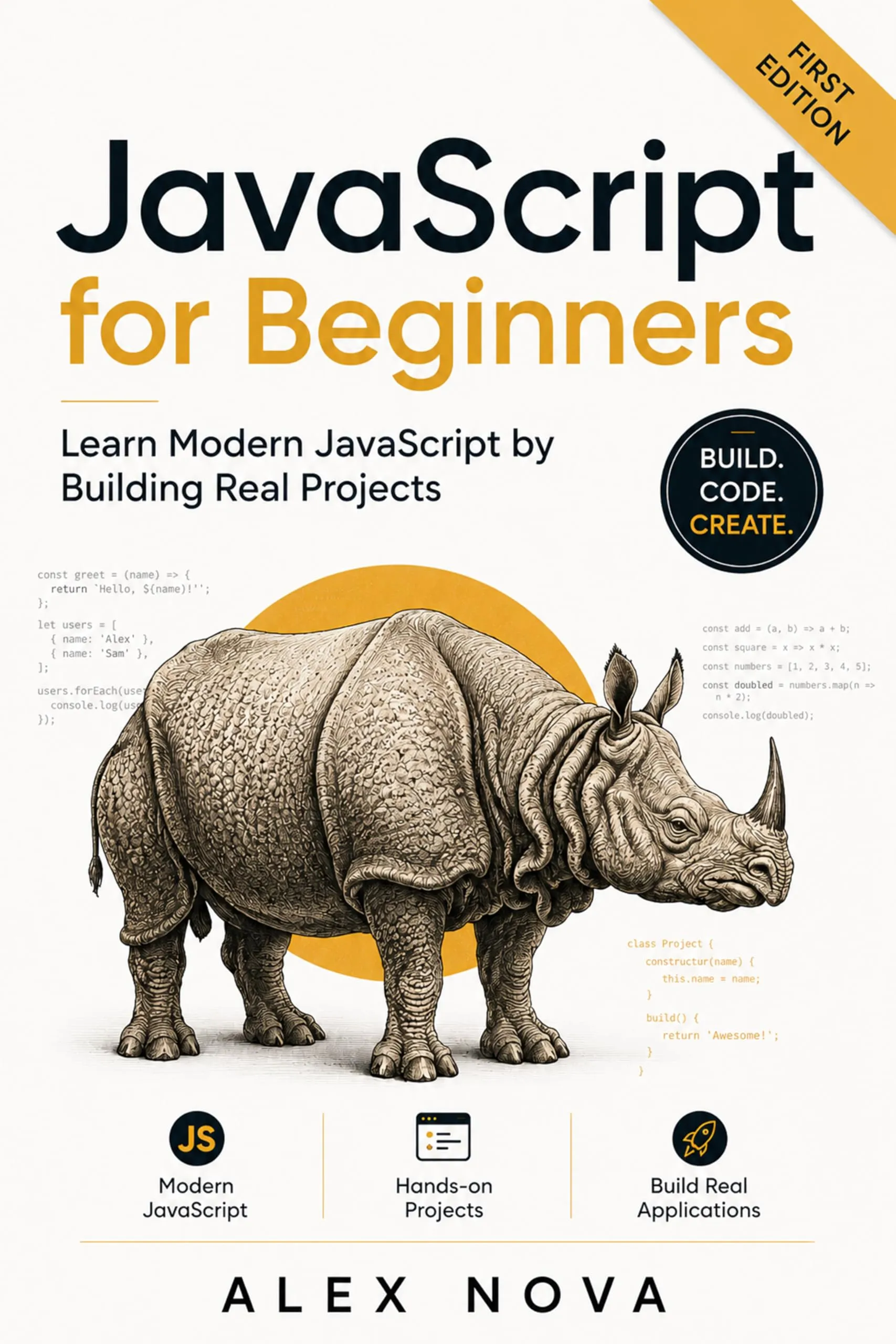
Starting with JavaScript can feel like stepping into a room where the conversation has been going on for twenty years. It is a language with a peculiar history, and it is easy for newcomers to get tripped up by tutorials teaching idioms you’ll just have to unlearn later. The promise of a guide focused squarely on modern JavaScript from the very beginning is, therefore, quite compelling.
Is The book for You?
From the description, this book is very clearly for the true beginner. If you’ve never written a line of code, and you suspect that ‘DOM manipulation’ isn’t a form of martial art, then this is likely the kind of structured start you need. It’s not trying to teach you the esoteric depths of the ECMAScript specification; it’s trying to get you from zero to building something that works on a web page.
The goal here appears to be building foundational competence. It’s about getting the fundamentals right so you can write code that works because you understand why it works, not just because you copied and pasted a snippet that happened to do the job.
Key Strengths to Consider
- A Hands-On Approach: Theory is one thing, but the understanding truly solidifies when you apply it. A project-based learning path forces you to bridge the gap between knowing a concept and using it to solve a problem. This is the difference between knowing what a hammer is and actually building a chair.
- Focus on Modernity: It is critical that a first book doesn’t saddle you with legacy practices. Learning modern syntax and features from the start is not a ‘nice to have’—it’s essential for being productive and writing maintainable code in today’s environment.
- Practical Skills Included: Writing code is only half the job. The other half is debugging it. Introducing the browser’s developer tools and professional best practices early on is an invaluable service. It helps cultivate good habits before the bad ones have a chance to form.
If you’re an experienced programmer from another discipline simply looking for a quick syntax guide, you might find the pace a bit measured. But for its intended audience—those who are genuinely starting their journey into programming and web development—this seems to represent a practical and well-judged first step. It prioritizes building over abstract theory, which for a newbie, is exactly as it should be.